
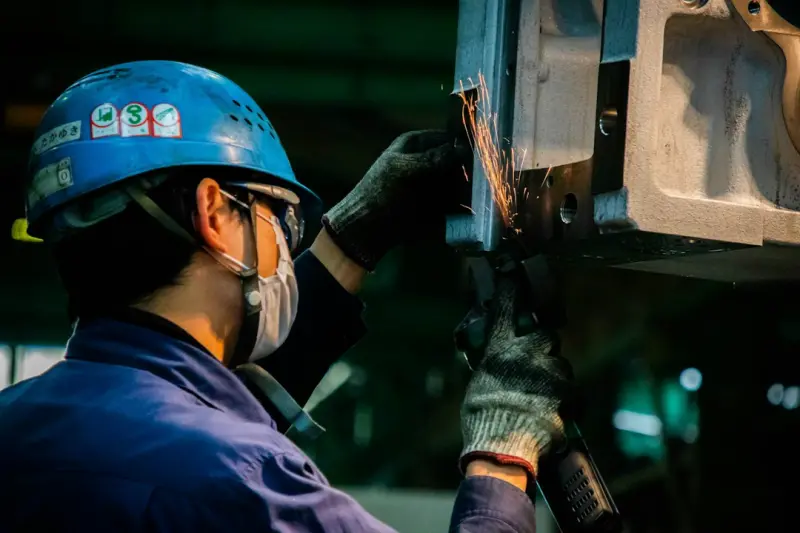
When you walk the floor of a bustling plant, the roar of compressors, the hum of conveyor belts, and the rhythmic clank of metal are more than just background noise—they’re the pulse of a massive, interconnected ecosystem. I’ve spent two decades watching that pulse accelerate, first with rugged hardware and later with data streams that whisper the health of every bearing, motor, and valve. What used to be reactive firefighting is now shifting toward anticipatory care, and the catalyst? Edge‑powered predictive maintenance that turns ordinary industrial gear into intelligent, self‑diagnosing assets.
Why Traditional Maintenance Is Losing Its Edge
For years, factories relied on a calendar‑driven approach: change a filter every 3,000 hours, replace a belt after a set number of cycles, or schedule an inspection after a fixed interval. This “time‑or‑usage” model is simple, but it treats every machine as if it were identical, ignoring the nuances of real‑world operation.
When a single motor runs hotter because of a slight misalignment, the standard schedule won’t catch it until the next planned downtime—often too late. The result is unnecessary part replacements, avoidable production halts, and a cascade of hidden costs that eat into margins.
Enter predictive maintenance. By continuously monitoring vibration, temperature, acoustic signatures, and power draw, you can spot the subtle signs of wear long before they manifest as failure. The real magic happens when this data is processed at the edge—right on the machine—so decisions are made in milliseconds, not minutes or hours.
The Edge Advantage: Processing Power Where It Matters
Cloud‑centric analytics have been the darling of many industrial IoT (IIoT) projects, but they introduce latency and bandwidth constraints that can be fatal in mission‑critical environments. Edge devices sit physically close to the sensor suite, equipped with ruggedized CPUs, GPUs, or specialized AI accelerators. They can run sophisticated models—think convolutional neural networks for vibration pattern recognition—without ever sending raw data to a distant server.
Benefits are threefold:
- Speed: Anomalies are flagged in seconds, enabling immediate corrective actions.
- Bandwidth Efficiency: Only actionable insights, not terabytes of raw sensor feeds, traverse the network.
- Resilience: Even during network outages, the edge node continues to safeguard the equipment.
Think of the edge as a seasoned foreman who knows each worker’s rhythm and can call out a misstep before it spirals into an accident.
Building the Predictive Stack: Sensors, Edge, and Insight
The predictive maintenance stack can be visualized as three layers:
- Data Acquisition: High‑resolution accelerometers, infrared thermometers, current clamps, and acoustic microphones gather the raw signals. Modern MEMS sensors are cheap, rugged, and can be retrofitted onto legacy equipment.
- Edge Analytics: A small industrial PC or purpose‑built gateway runs pre‑trained models. These models have been refined on historic failure data, learning the signature of a bearing about to seize or a motor winding that’s overheating.
- Enterprise Integration: The distilled insights—“Motor 3‑B shows 23% higher vibration amplitude”—feed into a maintenance management system (CMMS) or ERP, triggering work orders, spare‑part logistics, and KPI dashboards.
Each layer must be designed with reliability in mind. Sensors need protective housings, edge devices must survive temperature extremes, and the integration layer should be flexible enough to ingest data from multiple vendors without a bespoke connector for each.
Real‑World Impact: Numbers That Speak
Companies that have embraced edge‑enabled predictive maintenance report dramatic improvements:
- A 30‑40% reduction in unplanned downtime, translating to higher throughput and on‑time delivery.
- Up to 25% lower maintenance spend, as parts are replaced only when needed rather than on a fixed schedule.
- Extended equipment life, sometimes adding 20% more operating hours before a major overhaul.
These gains aren’t just theoretical. A leading automotive parts manufacturer integrated edge analytics on its stamping presses and saw a 12‑day annual reduction in production stoppage, directly adding millions to the bottom line.
Overcoming Barriers: From Legacy to Intelligent
Transitioning isn’t as simple as snapping on a sensor and pressing “go.” The biggest challenges include:
- Data Silos: Historical maintenance logs are often stored in spreadsheets or isolated databases. Consolidating this legacy data is essential for training accurate predictive models.
- Skill Gaps: Plant engineers may excel in mechanical design but lack data‑science expertise. Partnerships with analytics firms or upskilling programs bridge this divide.
- Cybersecurity: Edge devices become new entry points. Implementing zero‑trust principles—ensuring each device authenticates and encrypts its communication—protects the plant network. For a deeper dive on securing extensions, see Zero‑Trust Plugin Security.
Addressing these concerns early ensures a smoother rollout and faster ROI.
Leveraging Low‑Code Platforms for Rapid Deployment
One surprising accelerator is the rise of low‑code development environments. These platforms let engineers drag‑and‑drop data pipelines, model training workflows, and dashboard components without writing extensive code. The result is a faster iteration cycle—what used to take months can now be prototyped in weeks.
By using a low‑code approach, teams can:
- Rapidly prototype edge analytics for a single pump before scaling to the entire plant.
- Easily integrate predictive alerts into existing CMMS tools.
- Empower cross‑functional teams to experiment without waiting for IT bottlenecks.
For those curious about why low‑code is a game‑changer, the article Why Low‑Code Is the Secret Weapon for SaaS Innovators offers a compelling perspective that translates well to industrial settings.
The Future: Digital Twins Meet Edge Intelligence
Looking ahead, the convergence of digital twins—virtual replicas of physical assets—with edge analytics will push predictive maintenance into a new realm. Imagine a digital twin that not only mirrors the current state of a turbine but also runs simulations in real‑time, testing “what‑if” scenarios on the edge device itself. Operators could see the projected impact of a slight load increase before it ever happens on the shop floor.
This synergy creates a feedback loop: the edge node informs the twin of actual conditions; the twin runs predictive scenarios; the results flow back to the edge for immediate action. The outcome is a self‑optimizing system that continuously fine‑tunes performance while preemptively mitigating risk.
Getting Started: A Pragmatic Playbook
If you’re ready to bring edge‑powered predictive maintenance to your facility, follow these steps:
- Audit Existing Assets: Identify high‑value equipment with the most costly downtime.
- Start Small: Pilot on a single line or machine cluster. Choose sensors that are easy to install and have clear failure modes.
- Select an Edge Platform: Look for rugged hardware that supports AI inference, has built‑in security, and offers a low‑code interface if possible.
- Gather Historical Data: Pull past maintenance records, sensor logs, and operator notes to train baseline models.
- Develop & Test Models: Use a mix of statistical methods and machine learning, validating against known failures.
- Integrate with Workflows: Ensure alerts trigger automatically in your CMMS, with clear SOPs for technicians.
- Iterate and Scale: Refine models based on pilot feedback, then expand to other equipment groups.
Throughout this journey, keep security front‑and‑center. A recent discussion on safeguarding extensions highlights the importance of a robust, zero‑trust framework—principles that apply equally to edge devices.
Conclusion: From Reactive to Proactive Excellence
The industrial landscape is evolving faster than ever. Machines that once required routine check‑ups are now becoming sentient partners, whispering their needs before a failure ever materializes. By embracing edge‑driven predictive maintenance, manufacturers can slash downtime, cut costs, and extend the life of their most critical assets.
It’s not just a technology upgrade; it’s a cultural shift—from reacting to the unexpected to proactively engineering reliability. The future belongs to plants that listen to the data their equipment generates, act on it instantly, and continuously refine their processes. In that future, every motor, conveyor, and press becomes a smarter, more dependable member of the production orchestra.

Brad Hays is a freelance writer known for his versatile skill set and ability to craft compelling content across a wide range of industries.
Related Posts

Smart Sensors, Modular Pods, and Circular Design: The New Blueprint for Industrial Products
A deep dive into three transformative trends—edge‑enabled smart sensors, modular automation plat... Read More
Industrial Innovation in 2026: Smart, Sustainable, and Scalable Solutions
Discover the 2026 industrial trends—smart sensors, AI maintenance, sustainable materials, and digi... Read More

Predictive Maintenance Powered by IoT: Transforming Industrial Products
Explore the game‑changing role of IoT‑enabled predictive maintenance in industrial equipment, fr... Read More
Top Posts

The Unplugged Parenting Playbook: Reclaim Real Connection
A guide for parents to create screen‑free zones, share meals, and turn nature into a classroom, empowering children to develop real connection and curiosity....Read More

Amanda Williams’s Guide to a Bold, Balanced Lifestyle
Amanda Williams shares her rebel‑inspired lifestyle playbook, from smart home makeovers to fearless digital habits, to help you live boldly and sustainably....Read More

When Fraudsters Dress Up as SaaS Heroes: Spotting the New Wave of Scams
Scammers now mimic legitimate SaaS vendors with hyper‑personalized demos and credential traps. Discover their tactics, real‑world case studies, and a stepâ€...Read More

AI Copilots in the SaaS Toolbox: Turning Daily Chores into Strategic Wins
Explore practical strategies for integrating AI assistants into your SaaS stack, from selecting the right tools and embedding them in workflows to measuring imp...Read More
0 Comments
Post Comment
You will need to Login or Register to comment on this post!