

The Myth of “One‑Size‑Fits‑All” Hosting
When I first started advising SaaS founders on infrastructure, the most common advice was “use the cloud”. It made sense on the surface: scalability, pay‑as‑you‑go pricing, and a glossy UI that hides the complexity of servers. Yet, after months of watching performance dashboards dip during traffic spikes, security incidents slip through shared‑kernel walls, and compliance teams pull their hair over data residency, I realized many businesses were forced into a compromise.
Dedicated hosting offers a middle ground that feels like a custom‑built sports car in a world of generic sedans. You get raw, isolated hardware that you control end‑to‑end, while still leveraging the convenience of a managed provider. It’s not a “fallback” for legacy apps; it’s a strategic platform for SaaS products that need speed, security, and regulatory peace of mind.
Performance: The Real Cost of Latency
Latency is the silent killer of conversion rates. Studies show that a 100 ms delay can shave up to 7 % off revenue per transaction. In a shared environment, your CPU cycles are a communal resource—your neighbor’s nightly data crunch can steal bandwidth at the most critical moment.
Dedicated servers give you exclusive access to every core, every gigabyte of RAM, and every NVMe drive. That means you can:
- Fine‑tune kernel parameters for your specific workload, whether that’s a high‑frequency trading API or a machine‑learning inference engine.
- Deploy hardware‑accelerated networking such as 10 GbE or even 25 GbE cards, cutting round‑trip times for micro‑services that talk across data centers.
- Optimize storage stacks with tiered SSDs, RAID configurations, or direct‑attached storage that a cloud VM can’t match without costly add‑ons.
When you pair these hardware advantages with a well‑architected application stack, the result is a measurable uplift in response times—and ultimately, a healthier bottom line.
Security: Isolation Isn’t Optional
Shared hosting and multi‑tenant cloud instances rely on virtual isolation. While hypervisors have become robust, they remain a single point of failure. A hypervisor vulnerability can expose all tenants in a region, a nightmare scenario for SaaS platforms that manage sensitive customer data.
Dedicated hosting removes that shared attack surface. Your server lives alone, with its own BIOS, firmware, and network interfaces. This isolation enables you to:
- Implement hardware‑based root‑of‑trust using TPM modules, which provide immutable boot verification.
- Deploy custom firewalls and IDS/IPS solutions that sit directly on the host, rather than relying on a virtualized security layer.
- Run on‑premise compliance tools that require direct kernel access, such as DLP agents or privileged audit logs.
These capabilities are why many regulated industries—finance, healthcare, and government—still mandate dedicated environments for certain workloads. And for any SaaS product that wants to differentiate on trust, that’s a competitive moat.
Compliance & Data Sovereignty
Regulatory frameworks like GDPR, HIPAA, and the upcoming data‑localization laws in several countries impose strict requirements on where data can reside and how it’s protected. Cloud providers do offer compliance certifications, but they often involve complex, shared‑responsibility matrices that can be hard to audit.
With a dedicated server, you gain full control over:
- The physical location of the rack (many providers let you pick a specific city or even a data‑center within a metropolitan area).
- Encryption keys, which you can store in a hardware security module (HSM) you control, rather than a cloud‑managed key vault.
- Audit trails that capture every administrative action at the OS level, simplifying third‑party assessments.
In short, dedicated hosting turns compliance from a checklist into a tangible, verifiable process.
Customization: Build Your Own Stack
One of the most liberating aspects of dedicated hosting is the freedom to choose your own operating system, kernel version, and even custom patches. Need a specific version of PostgreSQL that isn’t yet available on your cloud marketplace? Install it yourself. Want to run a container runtime that bypasses the provider’s default CNI plugin for zero‑trust networking? Go ahead.
This level of customization is a game‑changer for teams that push the envelope with emerging tech. For example, integrating a semantic AI search engine that requires GPU‑accelerated drivers is far simpler on dedicated hardware than trying to spin up a spot instance with the exact driver stack you need.
Moreover, you can experiment with unconventional architectures—like a hybrid model that runs both a traditional monolith and a micro‑service mesh on the same physical host, each isolated by Linux namespaces. The possibilities expand as fast as your imagination.
Cost Transparency & Predictable Billing
Cloud pricing is notorious for its opacity. You start with a predictable base price, but then add data egress, API calls, premium storage, and suddenly your monthly invoice looks like a mystery novel.
Dedicated hosting usually follows a flat‑rate model: you pay a fixed amount for the server, bandwidth, and any managed services you opt into. No surprise fees for “burst” usage because you already own the capacity. This predictability is invaluable for finance teams that need to forecast cash flow and for investors who scrutinize burn rates.
Additionally, many providers offer “pay‑as‑you‑grow” upgrades—add a second CPU or increase your SSD pool with a single click—without the need for a full re‑architecture. The result is a cost model that aligns directly with the value you deliver to customers.
When Dedicated Beats the Cloud – Real‑World Scenarios
Let’s walk through a few concrete use cases where dedicated hosting shines:
- Real‑time analytics pipelines: A SaaS that processes millions of events per second needs deterministic I/O. Dedicated NVMe drives paired with a high‑throughput network guarantee sub‑millisecond processing, something that “burstable” cloud instances can’t reliably promise.
- High‑frequency trading APIs: Latency is measured in microseconds. A single shared hypervisor hop can cost a trader the market. Dedicated servers placed in proximity to exchange co‑location facilities provide the edge required to stay competitive.
- AI model serving: Large language models demand GPUs and high memory bandwidth. While some clouds offer GPU instances, the cost per inference can be prohibitive. A dedicated server with a handful of GPUs can deliver the same throughput at a fraction of the price, especially when you can fully utilize the hardware.
In each of these scenarios, the performance gains translate directly into revenue or cost savings, making the case for dedicated hosting not just technical, but financial.
Choosing the Right Provider
Not all dedicated hosting services are created equal. When evaluating a partner, keep these criteria in mind:
- Network redundancy: Look for multiple uplinks, carrier‑grade peering, and DDoS mitigation baked into the offering.
- Management options: Does the provider offer fully managed services (patching, monitoring, backup) or is it a bare‑metal “do‑it‑yourself” model? Choose based on your team’s expertise.
- Compliance certifications: Even if you control the hardware, you still benefit from a provider that already meets ISO 27001, SOC 2, or similar standards.
- Scalability pathways: Can you seamlessly transition to additional nodes or to a hybrid cloud model when growth demands it?
For teams that value data control but still need some cloud‑like conveniences, providers that bundle a virtual private server layer on top of dedicated hardware can offer the best of both worlds: the isolation of bare metal with the flexibility of virtualized workloads.
Future‑Proofing Your SaaS Architecture
The industry narrative often pushes “cloud‑first” as the default, but the reality is more nuanced. As SaaS products mature, they reach a point where the marginal gains from shared resources diminish, and the need for control, performance, and compliance becomes paramount. Dedicated hosting is not a step backward; it’s an evolution toward a more resilient, high‑performance stack that can adapt to emerging technologies—think edge computing, confidential computing, and AI‑driven workloads.
By adopting dedicated servers early, you lay a foundation that can incorporate these innovations without a major migration. Your engineering team can experiment with new kernels, custom networking stacks, or even specialized hardware like FPGAs, all while keeping your production environment stable and secure.
Conclusion: Make the Switch When It Matters
There’s no universal rule that says every SaaS must move to dedicated hosting, but for many growth‑stage companies the benefits outweigh the perceived complexity. If you’re wrestling with latency, security, compliance, or cost transparency, it’s worth putting dedicated servers on your roadmap.
Start with a pilot—a single high‑traffic micro‑service or a compliance‑heavy module—and measure the impact. You’ll likely discover that the performance uplift, security confidence, and predictable expenses justify a broader rollout.

Miranda Murphy: Experienced freelance writer with a decade of storytelling expertise. Let's create something amazing together!
Related Posts

Dedicated Hosting: The Strategic Backbone for Scalable SaaS Success
Dedicated hosting provides the performance, security, and cost predictability SaaS companies need to... Read More

Dedicated Hosting: Power, Control, and Future‑Proof Success
Dedicated hosting offers unmatched speed, security, and control, empowering businesses to scale sust... Read More

Dedicated Hosting: The Creative’s Secret Weapon for Speed, Security, and Scale
Dedicated hosting transforms a creator’s workflow with blazing speed, rock‑solid security, and e... Read More
Top Posts

Rewilding Your Routine: Tiny Nature Rituals for Modern Well‑Being
Learn to weave brief nature rituals into your daily life, creating calm, focus, and resilience through tiny, repeatable habits that transform well‑being....Read More

Unlocking Value: The Strategic Advantage of Loyalty Point Programs in Personal Finance
In an increasingly competitive marketplace, businesses perpetually seek methods to foster customer retention and encourage repeat patronage. Among the most perv...Read More
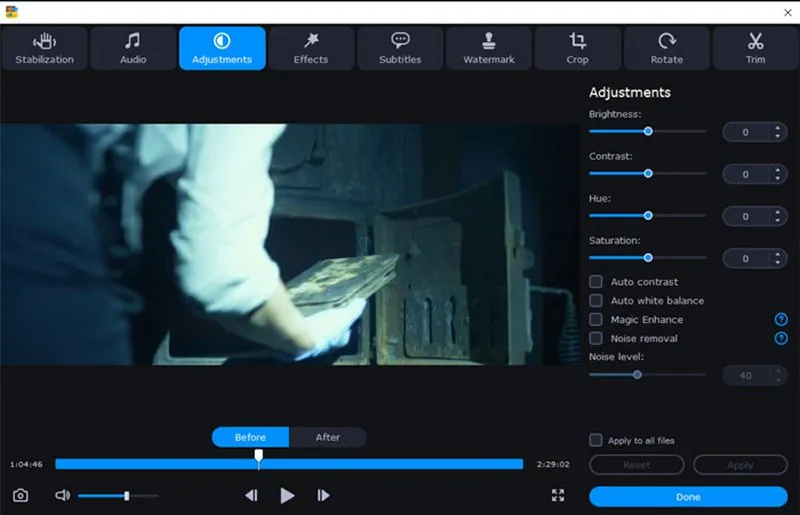
Movavi's video stabilizer a must have
In an age where nearly everyone carries a high-definition camera in their pocket, the sheer volume of video content being created daily is staggering. From capt...Read More

Celebrating Life's Milestones in the Digital Age
The digital age has revolutionized the way we celebrate life's milestones, from weddings and graduations to birthdays and anniversaries. But what does this mean...Read More
0 Comments
Post Comment
You will need to Login or Register to comment on this post!