
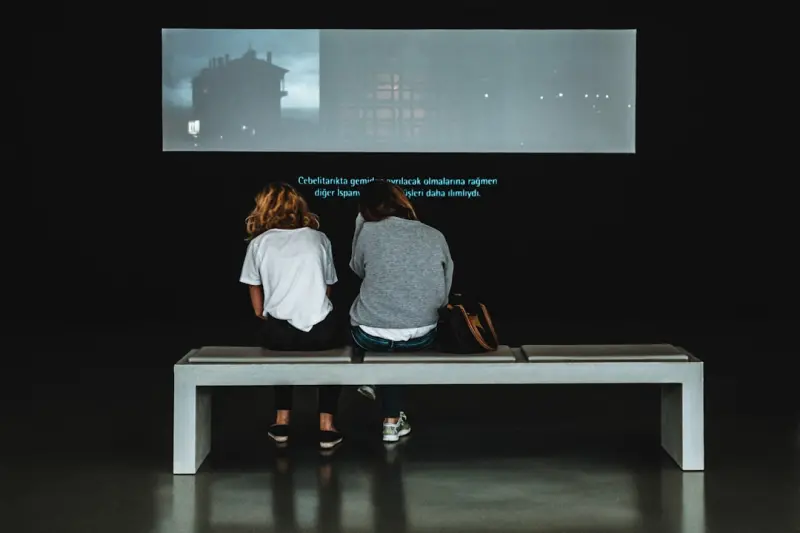
When the pandemic forced classrooms onto Zoom and learning management systems, I watched a wave of enthusiasm give way to a subtle, almost collective sigh. The promise of “anywhere learning” felt intoxicating at first—until the novelty faded and the reality of staring at a screen for eight hours a day set in. As someone who’s spent the last decade navigating the crossroads of education and technology, I’ve learned that the most powerful learning moments happen far from a pixelated grid.
The Hidden Cost of an All‑Digital Diet
Digital content is a marvel. It scales, it personalizes, it can be updated in seconds. Yet the same qualities that make it efficient also make it dangerously thin. Learners report cognitive overload, reduced attention spans, and a growing sense of isolation. When you strip away the tactile feedback of a physical notebook or the spontaneous conversation that happens in a hallway, you’re left with an echo chamber of slides and quizzes.
One of the biggest culprits is digital boundaries being constantly tested. The line between “learning time” and “always‑on time” blurs, and students—especially remote ones—find it hard to disengage. The result? Burnout before mastery.
Why Real‑World Projects Matter
Imagine a student in a small town tasked with designing a low‑cost water filtration system for their community. Now picture that same student confined to a virtual lab, watching a video about filtration without ever holding a piece of charcoal. The difference isn’t just in the level of engagement; it’s in the depth of understanding.
Real‑world projects create a feedback loop that digital exercises rarely achieve:
- Purpose‑Driven Learning: When learners see a tangible outcome—whether it’s a prototype, a report for a local nonprofit, or a piece of code that solves a real problem—they’re motivated to push through challenges.
- Contextual Knowledge: Concepts are no longer abstract; they’re anchored in a scenario that requires interdisciplinary thinking.
- Social Connection: Projects often demand collaboration, sparking conversations that mimic the spontaneous hallway debates we miss online.
- Resilience Building: Failure becomes a stepping stone. When a prototype doesn’t work, students iterate—mirroring the real world’s trial‑and‑error rhythm.
Designing Projects That Thrive in a Remote Landscape
Creating a compelling project isn’t about packing a syllabus with as many tasks as possible. It’s about curating experiences that are feasible, relevant, and, most importantly, adaptable to a remote setting.
1. Start With a Clear, Measurable Goal
Instead of “learn about ecosystems,” frame the goal as “design a mini‑aquarium that balances nitrogen levels without chemical additives.” Specificity guides learners and makes assessment straightforward.
2. Anchor the Project in Local Context
Even when students are scattered across continents, they can each tap into their own community. A “sustainable packaging” challenge could involve sourcing local biodegradable materials, while a “data‑driven health initiative” might use public health data from each learner’s city.
3. Break It Down Into Micro‑Milestones
Large projects can feel intimidating. Segment the work into weekly deliverables—research briefs, design sketches, prototype tests—so students see continuous progress. This also aligns nicely with seamless tool integration strategies, where automation can handle reminders, peer reviews, and rubric checks.
4. Provide a Toolkit, Not a Script
Offer a curated set of resources—open‑source datasets, low‑cost hardware kits, collaborative platforms—while leaving the creative decisions in the learners’ hands. This balance respects autonomy and encourages innovation.
5. Embed Reflection Loops
After each milestone, prompt learners to journal (digitally or on paper) what worked, what didn’t, and why. Reflection transforms experience into knowledge, cementing the learning gains.
Technology as an Enabler, Not a Substitute
The temptation is to lean on tech for every facet of a project. While digital tools can streamline communication, data collection, and version control, they should augment—not replace—the tactile and social elements that make projects meaningful.
Consider these tech touchpoints:
- Virtual Whiteboards for brainstorming across time zones.
- Cloud‑Based Repositories (GitHub, Google Drive) for sharing artifacts.
- Video Check‑Ins to simulate face‑to‑face mentorship.
- Automated Peer Review Workflows that flag missing criteria before a submission reaches the instructor.
By leveraging micro‑automation for routine tasks—like sending reminder emails or aggregating survey results—you free up mental bandwidth for deeper creative thinking.
Measuring Impact: From Clicks to Competence
Traditional LMS metrics (log‑ins, quiz scores) fall short when evaluating project‑based work. Instead, adopt a mixed‑methods approach:
- Performance Rubrics that assess problem‑solving, collaboration, and iteration quality.
- Self‑Assessment Surveys that capture confidence growth and perceived relevance.
- Stakeholder Feedback from community partners or industry mentors who interact with the final deliverable.
- Analytics Dashboards that visualize time spent on each milestone, highlighting bottlenecks for future course redesign.
Overcoming Common Hurdles
Logistical Challenges: Shipping hardware kits to remote learners can be pricey. Mitigate by partnering with local makerspaces or using low‑cost, locally sourced materials.
Equity Gaps: Not every student has a stable internet connection. Design parts of the project that can be completed offline—think paper prototypes, field observations, or handwritten data logs.
Assessment Anxiety: The open‑ended nature of projects can intimidate learners used to multiple‑choice tests. Offer exemplars, clear rubrics, and scaffolded feedback to build confidence.
Time Management: Remote learners juggle many responsibilities. Emphasize the micro‑milestone structure and use automated reminders to keep them on track.
A Mini‑Case Study: The “Local Climate Action Lab”
At a mid‑size university, I consulted on a semester‑long course where each team tackled a climate‑related issue in their hometown. Teams received a starter kit containing a low‑cost temperature sensor, a data‑logging app, and a budget for local materials.
Over ten weeks, students:
- Collected temperature data from three neighborhood spots.
- Analyzed trends using an open‑source statistical tool.
- Designed a community outreach flyer proposing tree‑planting zones.
- Presented findings via a live virtual symposium, fielding questions from municipal officials.
Outcomes were striking:
- 85% of participants reported a “significant increase” in confidence applying data science to real problems.
- The city incorporated two student‑suggested planting sites into its upcoming green plan.
- Course evaluations jumped from an average of 3.2 to 4.7 out of 5, with comments highlighting the “real‑world impact” and “sense of purpose.”
This example underscores how a well‑structured project can bridge the gap between remote learning and tangible community benefit.
The Future: Hybrid Project‑Centric Curricula
Looking ahead, I see a shift toward curricula where projects are not an add‑on but the core scaffolding. Imagine a semester where every module is a “mission”—a problem statement, a toolkit, a community partner, and a digital hub for collaboration. In such a model:
- Students graduate with a portfolio of real‑world artifacts, not just certificates.
- Educators become “mission designers,” curating challenges that align with industry trends and local needs.
- Institutions forge stronger ties with businesses, NGOs, and government agencies, creating a virtuous ecosystem of talent and impact.
To make this vision a reality, we must keep two principles front‑and‑center: purpose and human connection. Technology will remain a vital catalyst, but the heart of learning will always be the moment a learner sees their idea take shape beyond the screen.
Closing Thoughts
Remote education isn’t a permanent substitute for the classroom; it’s a new frontier that demands a rethink of what learning looks like. By embedding real‑world projects into our digital courses, we give learners a reason to rise from their chairs, a reason to collaborate, and a reason to feel that their education matters outside the confines of a virtual syllabus. It’s time to move beyond screens and let curiosity lead the charge.

Paul Flynn is a versatile freelance writer equipped with a diverse skillset and a portfolio that reflects his wide-ranging interests and expertise. From crafting compelling website copy and engaging blog posts to delivering in-depth articles and meticulously researched reports, Flynn demonstrates a remarkable ability to adapt his writing style to suit various audiences and purposes.
Related Posts

Learning at the Speed of Change: Building Adaptive Communities for Modern Professionals
A fresh look at how adaptive learning communities, micro‑learning sprints, and secure edge‑enabl... Read More

The Tangible Edge: Why Handwritten Learning Beats Digital Overload
A deep dive into why the physical act of writing, sketching, and sharing notebooks can dramatically ... Read More

The Erosion and the Profound Burden of Declining Educational Standards
The quality of a nation’s educational system is the truest measure of its future potential. While ... Read More
Top Posts

The Rise of Edge‑First SaaS: Why Proximity Beats Power
Edge‑first SaaS shifts computation and storage to the network’s periphery, delivering lower latency, regional compliance, and new revenue streams—essentia...Read More
Micro‑Communities: Redefining Belonging in Hyperconnected World
Micro‑communities are the quiet revolution redefining how we belong, collaborate, and advocate in a hyperconnected world, offering intimacy, rapid skill trans...Read More

5 Ways To Help Your Kids Do Math
For many children, and indeed many adults, mathematics can feel like a formidable mountain to climb. The abstract concepts, the endless equations, and the press...Read More
Turning Micro‑Moments into SEM Gold for B2B SaaS
A deep dive into micro‑moments reveals how B2B SaaS companies can transform tiny intent signals into powerful SEM wins, with actionable strategies, AI‑drive...Read More
0 Comments
Post Comment
You will need to Login or Register to comment on this post!