

In the landscape of modern home automation, the term "smart home" has evolved from a futuristic luxury into a baseline expectation for the connected consumer. However, many homeowners possess arrays of intelligent devices-smart thermostats, automated lighting, advanced security cameras, and connected locks-that operate in isolation or on rigid, static schedules. They are "smart" in name, but they lack the intuition that truly defines an automated living environment.
The missing link in this ecosystem is rarely better hardware; it is the implementation of geofencing. By transforming your home from a reactive space into a proactive partner, geofencing offers a level of convenience, energy efficiency, and security that static scheduling simply cannot achieve. If you aren't yet using geofencing to manage your domestic environment, you are missing out on the single most effective tool for personalizing your living space.
Understanding the Invisible Perimeter
At its core, geofencing is a location-based service that utilizes the GPS, cellular data, or Wi-Fi signals from your smartphone to establish a virtual boundary—a "fence"—around a specific geographic location. When your device crosses this threshold, it triggers a pre-programmed action within your integrated smart home ecosystem.
Think of it as a digital handshake between your phone and your home. As you pull into your driveway, your home senses your arrival and begins its "Welcome Home" routine. When you depart for the day, the home senses your exit and shifts into "Economy" mode. It is seamless, invisible, and remarkably effective.
The Pillar of Energy Efficiency
One of the most compelling arguments for geofencing is its profound impact on energy consumption. Traditional smart thermostats rely on programmable schedules, which are often built on the assumption that life follows a predictable routine. But the modern lifestyle is anything but linear. Meetings run late, grocery errands take longer than expected, and impromptu social plans disrupt even the most meticulously crafted schedule.
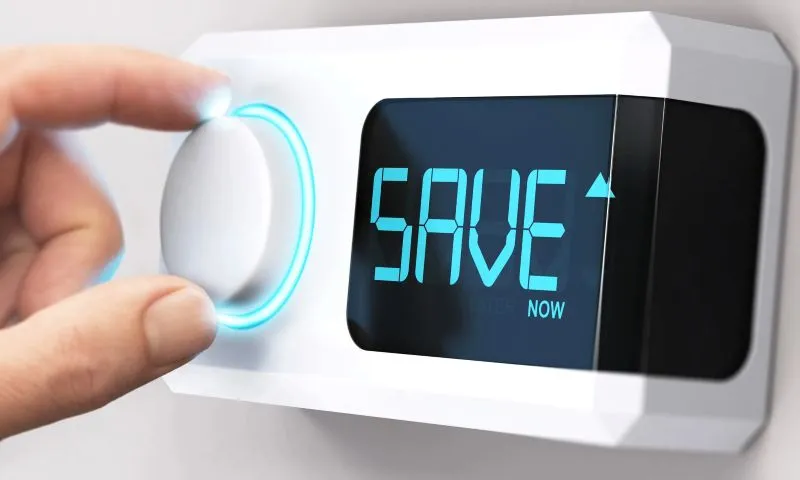
When your thermostat is tethered to a static schedule, you end up heating or cooling an empty house, wasting significant amounts of electricity and gas. Geofencing eliminates this inefficiency. By detecting your distance from home, your climate control system can maintain an energy-saving "eco" temperature while you are away, and begin adjusting to your preferred comfort level as you approach the house. Whether you are ten minutes away or thirty, the system ensures you aren't paying to heat a ghost town, nor are you returning to a frigid or stifling living room. Over the course of a year, the cumulative savings on utility bills are substantial, often paying for the cost of the smart thermostats themselves.
Heightened Security and Peace of Mind
Security is another area where geofencing shifts the paradigm from reactive to preemptive. While traditional alarm systems rely on manual arming and disarming—a process prone to human error—geofencing automates this critical task.
How many times have you reached the office, only to wonder if you remembered to lock the front door or activate the security alarm? With geofencing, that anxiety vanishes. You can configure your system to automatically lock all deadbolts, close your garage door, and arm your security sensors the moment your smartphone exits your defined perimeter.
Conversely, the system can perform a "security sweep" when you return. Upon crossing the geofence threshold, your smart locks can disengage, your porch lights can illuminate, and your interior lights can transition to a welcoming brightness, ensuring you never have to navigate a dark driveway or fumble with keys. This not only adds a layer of convenience but acts as a psychological deterrent to intruders, as the home appears lived-in and responsive even when it’s vacant.
Enhancing the "Ritual of Return"
Beyond the functional aspects of efficiency and security, geofencing taps into the intangible benefit of atmosphere. We spend a disproportionate amount of time and effort curating our homes, yet we often return to them in a state that requires manual adjustments—turning on lights, adjusting the shades, or starting a playlist.
Geofencing allows you to script the "Ritual of Return." Imagine pulling into your driveway at night to find the exterior pathway illuminated, the smart blinds in the living room lowering to provide privacy, and your favorite music streaming at a low volume throughout the house. Because the geofence provides a precise trigger, these actions are orchestrated to coincide with your arrival. It is a subtle, high-end experience that transforms the mundane act of entering your home into a personalized greeting.
Addressing Privacy and Reliability
The most common hesitation regarding geofencing is the concern over privacy and reliability. It is a valid professional consideration: you are, after all, tracking your location to control your home. However, modern smart home platforms—such as HomeKit, Google Home, and Samsung SmartThings—have implemented robust encryption and sandboxing protocols to ensure that location data is used locally and exclusively for automation purposes.
Reliability has also seen massive improvements. Early iterations of geofencing were prone to "ghosting," where the home would trigger actions at the wrong time due to inaccurate GPS data. Today’s systems utilize a combination of GPS, cellular triangulation, and Wi-Fi handshakes to create a highly accurate boundary that rarely misfires. For those with larger homes or complex connectivity, adding multiple "nodes" (such as local Wi-Fi presence detection) creates a fail-safe system that ensures you are never locked out—or left in the dark.
How to Get Started
If you are ready to implement geofencing, the process is likely simpler than you realize. Most modern smart home hubs have native geofencing capabilities built directly into their applications.
- Select Your Hub: Choose a centralized platform (like Apple Home, Google Home, or an IFTTT integration) that acts as the "brain" of your devices.
- Define the Perimeter: Use the app to locate your home on a map and set the radius of your geofence. A radius of 100 to 500 meters is typically ideal, depending on how quickly you want your home to react.
- Define the Routines: Start small. Begin by automating your thermostat and your front door lock. Once you are comfortable with the reliability of those triggers, expand the routine to include lighting, window shades, and security systems.
- Test and Refine: Spend a week observing how the fence triggers your devices. You may find that you need to adjust the radius to account for local traffic patterns or the time it takes to walk from your garage to your front door.
The Bottom Line
We live in an age where technology is meant to serve us, not demand our constant attention. By relying on static, manual schedules, we are continuing to work for our homes rather than letting our homes work for us. Geofencing is the ultimate evolution in domestic management—it is invisible, intelligent, and deeply attuned to the reality of our daily lives.
By creating an invisible perimeter around your property, you aren't just adding a layer of convenience; you are optimizing your energy footprint, increasing the security of your most valuable assets, and ensuring that your home is always ready to receive you. If you have the hardware, the software is already at your fingertips. It is time to stop managing your home and start letting your home manage itself.

Jimmy Anand is a content creator that gets inspired by many aspects of life, internet or whatever inspires him at that moment. When he's not online he's gaming and when he is not gaming he is online trolling discussion boards.
Related Posts
Smart Storage Hacks for Multi‑Gen Homes: Keep Everyone Happy
A warm, step‑by‑step guide to creating flexible, family‑friendly storage zones that work for k... Read More
Optimizing Thermal Performance: Comprehensive Strategies for Maintaining Interior Comfort and Maximizing Winter Energy Efficiency
The annual shift toward colder temperatures brings with it the critical challenge of maintaining a c... Read More

11 Home Security Recommendations for Your Winter Vacation
As the winter season approaches, many of us are eager to embark on a well-deserved vacation, leaving... Read More
Top Posts

How to Use Guest Posts to Establish Your Professional Credibility
In the ever-evolving digital landscape, establishing yourself as a credible expert in your field is paramount. It's not just about having knowledge; it's about ...Read More

Why Cloud Gaming is the Indie Developer’s Secret Weapon
Indie game makers are harnessing cloud gaming to slash costs, scale globally, and deliver smoother multiplayer experiences, unlocking new creative possibilities...Read More

Why Managed WordPress Hosting Is the Unsung Engine Behind Scalable B2B SaaS Marketing
Managed WordPress hosting isn’t a luxury—it’s a strategic advantage that delivers faster load times, tighter security, and real cost savings, empowering B...Read More

Turning LinkedIn Into Your Personal Growth Engine
Learn to turn LinkedIn into a dynamic hub for thought leadership, community building, and career acceleration using proven, data‑backed strategies....Read More
0 Comments
Post Comment
You will need to Login or Register to comment on this post!