
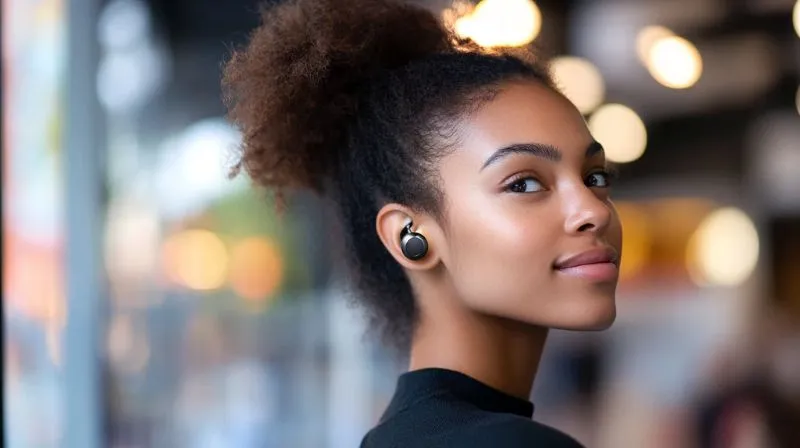
In a world where business deals, cultural exchanges, and personal relationships increasingly cross linguistic borders, the ability to understand one another instantly has moved from a futuristic fantasy to a practical necessity. The convergence of artificial intelligence (AI), natural‑language processing (NLP), and wearable technology has given rise to a new class of consumer devices: AI translator headphones. These sleek, wireless earsets promise to dissolve language barriers the moment a conversation begins, delivering translations that are not only accurate but also context‑aware, emotionally nuanced, and delivered with the immediacy that modern life demands.
This article examines the technical foundations, user experience considerations, market dynamics, and future trajectories of AI translator headphones. By unpacking each layer, we aim to provide a comprehensive understanding of how these devices are reshaping global communication and what challenges lie ahead.
1. The Technical Backbone
1.1. Speech Recognition and Acoustic Modeling
At the heart of any translator headphone lies a high‑fidelity speech‑to‑text engine. Modern acoustic models, built on deep neural networks (DNNs) and trained on millions of hours of multilingual audio, can differentiate speakers, isolate voices from background noise, and transcribe spoken words with sub‑second latency. Advances such as end‑to‑end transformer architectures (e.g., Conformer) enable the model to simultaneously learn acoustic features and linguistic patterns, reducing the need for separate language‑specific modules.
1.2. Contextual Natural‑Language Understanding
Once speech is converted to text, the system must interpret meaning. Unlike static phrasebooks, AI translator headphones rely on large language models (LLMs) that can capture syntactic subtleties, idiomatic expressions, and cultural references. By leveraging contextual embeddings, the device can disambiguate homonyms ("bank" as a financial institution versus a riverbank) based on surrounding words and situational cues, delivering translations that retain the speaker's intended nuance.
1.3. Real‑Time Machine Translation
The translation layer utilizes neural machine translation (NMT) pipelines that have evolved from encoder‑decoder RNNs to attention‑driven transformers. These models, trained on parallel corpora encompassing billions of sentence pairs, generate translations in fractions of a second. Recent innovations—such as adaptive inference, where the model dynamically adjusts its depth based on sentence complexity—help balance speed and accuracy, ensuring that conversational flow is not interrupted.
1.4. Speech Synthesis and Prosody Preservation
The final step is rendering the translated text back into audible speech. Neural text‑to‑speech (TTS) systems, particularly those based on variational autoencoders and flow‑based models, produce natural‑sounding voices with controllable prosody. Crucially for translator headphones, these systems can mimic the speaker's emotional tone (e.g., excitement, sarcasm) and preserve rhythm, making the translation feel like a seamless extension of the original utterance rather than a mechanical read‑out.
1.5. Edge Computing vs. Cloud Offloading
Speed and privacy are two competing demands. Early generations of translator devices relied heavily on cloud processing, transmitting audio to remote servers for analysis—a model that introduced latency and raised data‑security concerns. Contemporary designs adopt a hybrid architecture: lightweight acoustic front‑ends and preliminary language detection run locally on the headphone’s embedded AI chip (often a custom ASIC or an edge‑optimized GPU), while heavier translation tasks are offloaded to the cloud when a stable connection exists. This balance enables near‑instantaneous responses in low‑bandwidth environments while safeguarding sensitive speech data through on‑device encryption.
2. Designing the User Experience
2.1. Seamless Interaction
Professional users—business travelers, diplomats, journalists—require an interface that does not distract from the conversation. AI translator headphones therefore emphasize hands‑free activation: a subtle tap on the earbud, a double‑tap, or a voice trigger ("Hey Translate") initiates the translation mode. Once active, the device automatically detects the language spoken by each participant, switching translation directions on the fly without manual configuration.
2.2. Adaptive Noise Cancellation
Real‑world environments are rarely quiet. To maintain transcription fidelity, the headphones integrate advanced active noise cancellation (ANC) that isolates the target speaker’s voice while attenuating ambient sounds. Multi‑mic arrays and beamforming algorithms create a directional "listening cone," enabling accurate capture even in bustling cafés or airport lounges.
2.3. Personalization and Language Profiles
A truly professional translator must respect individual preferences. Users can upload language profiles that contain industry‑specific terminology (e.g., medical jargon, legal clauses) and preferred dialects (British English vs. American English, Mandarin vs. Cantonese). Machine learning models then weight these custom vocabularies higher during translation, reducing the likelihood of misinterpretation of specialized content.
2.4. Visual Feedback and Accessibility
Although the primary output is auditory, visual cues remain essential for verification and accessibility. A companion smartphone app displays the original transcript, the translated text, and confidence scores. For users with hearing impairments, the app can provide real‑time captions, while for those in noisy settings, a subtle vibration pattern indicates when a translation is ready.
2.5. Battery Life and Ergonomics
Professional adoption hinges on reliability. Modern AI translator headphones typically achieve 12–18 hours of continuous use, thanks to low‑power AI accelerators and efficient firmware. The form factor mirrors premium consumer earbuds—lightweight, ergonomically shaped, and equipped with water‑resistant seals—ensuring comfort during long meetings or travel.
3. Market Landscape and Business Implications
3.1. Current Players and Differentiation
The market is populated by a mix of established audio manufacturers (e.g., Sony, Bose) and AI‑focused startups. Differentiation occurs along three axes:
- Translation Accuracy – Companies that have secured partnerships with leading NLP research labs or own proprietary LLMs claim higher fidelity, especially in low‑resource languages.
- Hardware Integration – Brands that embed bespoke AI chips reduce latency and enhance privacy, positioning themselves for enterprise contracts.
- Ecosystem Services – Some providers bundle the headphones with cloud‑based analytics, offering post‑conversation sentiment analysis and keyword extraction for business intelligence.
3.2. Enterprise Adoption Scenarios
- Multinational Corporations: Global teams can hold multilingual video conferences without relying on human interpreters, cutting costs and speeding decision cycles.
- Healthcare: Front‑line clinicians interacting with patients who speak different languages can obtain real‑time translations, improving diagnosis accuracy and patient satisfaction.
- Education: Universities offering international programs can equip students with translator headphones, facilitating immersive learning and cross‑cultural collaboration.
3.3. Pricing Models
Consumer‑grade devices usually retail between $150–$300, whereas enterprise solutions—often bundled with subscription‑based translation APIs and dedicated support—range from $500–$1,200 per unit, plus a monthly service fee for cloud processing (typically $5–$20 per user). Volume licensing and API usage tiers allow large organizations to scale cost‑effectively.
3.4. Regulatory and Privacy Considerations
When speech data traverses borders, it becomes subject to data‑protection regimes such as the EU’s GDPR, China’s PIPL, and the U.S. state‑level privacy statutes. Vendors must implement data minimization (storing only metadata), end‑to‑end encryption, and transparent user consent flows. For industries like finance and healthcare, compliance with sector‑specific standards (e.g., HIPAA, PCI DSS) is mandatory, influencing both device architecture and cloud‑service contracts.
4. Technical and Societal Challenges
4.1. Linguistic Diversity and Low‑Resource Languages
While AI models excel in high‑resource languages (English, Spanish, Mandarin), many languages lack sufficient parallel corpora for training robust translators. Efforts such as unsupervised NMT, transfer learning from multilingual models, and community‑sourced data collection aim to close this gap, but the performance disparity remains a barrier to truly universal communication.
4.2. Real‑Time Emotional Fidelity
Human speech conveys more than lexical meaning; tone, sarcasm, and cultural references shape interpretation. Capturing these subtleties in a sub‑second pipeline is non‑trivial. Current TTS engines can adjust pitch and speed, but replicating complex emotional states often requires additional context that may be unavailable within the limited audio snippet.
4.3. Latency Under Variable Network Conditions
Even with edge processing, certain language pairs demand cloud‑based inference due to model size. In low‑bandwidth or high‑latency networks (e.g., remote field locations), translation delays can disrupt the natural rhythm of conversation. Adaptive fallback strategies—such as delivering a succinct “partial translation” while the full output is still being computed—are being explored to mitigate this issue.
4.4. Ethical Concerns and Misuse
Instant translation tools could be employed for deceptive purposes, such as manipulating conversations or facilitating illicit coordination across borders. Manufacturers must embed audit logs, usage monitoring, and access controls to deter malicious exploitation while preserving legitimate privacy expectations.
4.5. User Trust and Acceptance
Adoption hinges on user confidence that the device will not misinterpret critical information. Transparent confidence scoring, the ability to request clarification ("repeat translation"), and a clear visual display of the original transcript help build trust. Moreover, cultural sensitivity-ensuring that translations do not inadvertently introduce bias or offense-is essential for widespread acceptance.
5. The Road Ahead: Emerging Trends
5.1. Integration with Augmented Reality (AR)
Future translator headphones may pair with AR glasses, overlaying translated subtitles directly onto the speaker’s face or the environment. This multimodal approach can reinforce comprehension, especially in noisy settings where audio alone may falter.
5.2. Federated Learning for Continuous Improvement
To refine language models without compromising privacy, manufacturers are piloting federated learning schemes. Devices locally update model weights based on user interactions, then aggregate those updates in a secure, anonymized manner on the server. This strategy enables the system to adapt to evolving slang, regional dialects, and industry‑specific vocabularies while keeping raw speech data on the device.
5.3. Biometric Personalization
By analyzing subtle biometric cues-such as the user's vocal timbre or ear shape—headphones can customize acoustic profiles, improving both ANC performance and TTS naturalness. In the long term, biometric data could be used to personalize translation style, matching the user’s preferred level of formality.
5.4. Expanded Ecosystem Services
Beyond raw translation, AI translator headphones are poised to become hubs for contextual assistance: real‑time fact‑checking, on‑the‑fly dictionary lookups, and post‑conversation analytics (e.g., sentiment trends, action‑item extraction). Such services transform the device from a passive conduit into an active collaborator.
5.5. Standardization and Interoperability
Industry consortia are beginning to define open protocols for language detection, model exchange, and secure data transmission. Standardization will allow third‑party developers to create plug‑ins-such as specialized medical terminology packs—ensuring that the ecosystem remains vibrant and adaptable to niche requirements.
6. Conclusion
AI translator headphones exemplify the convergence of cutting‑edge machine learning, sophisticated acoustic engineering, and human‑centered design. By delivering real‑time, context‑aware translations directly to the ear, they empower professionals to operate fluidly across linguistic borders, reduce reliance on costly human interpreters, and foster more inclusive global interactions.
However, the technology is still maturing. Addressing linguistic equity, preserving emotional nuance, ensuring privacy, and establishing robust ethical safeguards will determine whether translator headphones become a ubiquitous business tool or remain a niche luxury. As hardware becomes more capable and AI models continue to grow in size and sophistication, the line between human and machine‑mediated conversation will blur, ushering in an era where language is no longer a barrier but a seamlessly managed layer of communication.
In the years ahead, the devices we wear on our ears may very well become the most powerful diplomatic agents, business negotiators, and cultural ambassadors we ever possess-quiet, unobtrusive, and always ready to translate the world into a shared language of understanding.

Sanji Patel is a Staff Writer at Blogging Fusion and a globally recognized SEO consultant with 25 years of industry experience. He specializes in delivering comprehensive technical and editorial SEO services to news publishers worldwide. Sanji frequently shares his insights as a speaker at international conferences and delivers annual guest lectures at local universities.
Professional Profile
- Current Role: Staff Writer at Blogging Fusion.
- Core Expertise: Technical and editorial SEO strategy.
- Target Audience: Global news publishers and digital media outlets.
- Industry Experience: 25 years of dedicated SEO consultancy.
- Public Engagement: International conference speaker and university guest lecturer.
Related Posts

When AI Becomes Your Boardroom Ally: Decision‑Making at the Speed of Thought
A deep dive into decision‑intelligence AI, showing how boardrooms can move from static reports to ... Read More

The Deepfakes Are Winning. How Can You Tell if a Video or Image is AI?
We are living through a silent, digital arms race. On one side, a burgeoning industry of sophisticat... Read More

AI as Your Personal Coach: The Quiet Revolution in Everyday Productivity
Explore the rise of AI personal coaches that anticipate your needs, provide transparent nudges, and ... Read More
Top Posts

The Power of Sustainable Marketing: How Eco-Friendly Practices are Revolutionizing the Industry
Sustainable marketing is more than just a trend; it's a movement. Learn how eco-friendly practices are changing the way businesses approach marketing and how to...Read More

How AI is Redefining Legal Practice and What It Means for Tomorrow's Lawyers
AI is reshaping the legal field faster than ever. From automating routine tasks to redefining client relationships, lawyers must navigate new ethical terrain wh...Read More

Mastering On‑Page SEO: A Mindset for Modern Rankings
Learn how to combine rapid page performance, strategic content, and solid technical foundations to dominate search results with a modern on‑page SEO sprint mi...Read More

Raising a Generation of Eco-Warriors: Why Sustainable Living Matters for Kids
Discover the importance of sustainable living for kids and how parents can instill eco-friendly habits to create a healthier planet for future generations....Read More
0 Comments
Post Comment
You will need to Login or Register to comment on this post!