
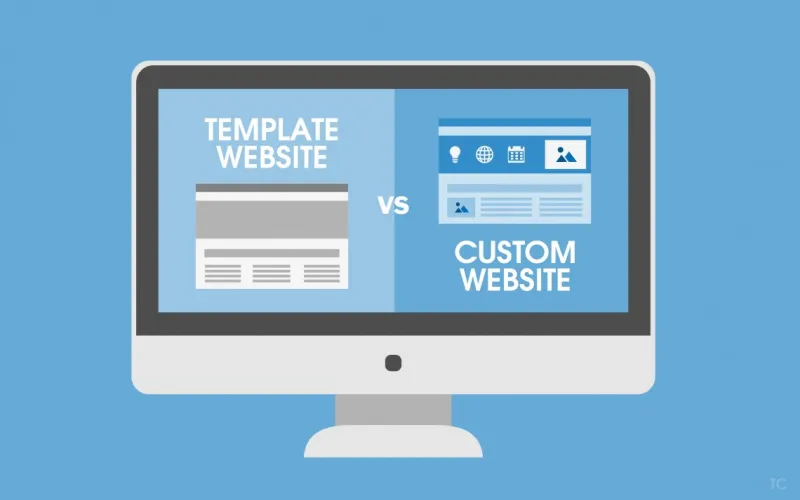
A website is often the first—and sometimes the only—point of contact between a business and its audience. The design of that site therefore carries far more weight than a simple collection of pages; it is a strategic asset that can influence perception, drive conversion, and sustain growth. While ready‑made templates promise speed and low cost, a custom‑built website offers a depth of advantage that can be decisive for brands that aim to stand out, adapt, and thrive online. Below, we explore the core reasons why custom web design consistently outperforms basic templates, examining the impact on branding, user experience, performance, SEO, security, scalability, and long‑term return on investment.
1. Brand Identity Becomes a Living Experience
A template is essentially a one‑size‑fits‑all canvas. Its layout, color palette, typography, and interaction patterns are predetermined to serve a broad audience. When a business adopts such a framework, it must either compromise its visual language or force the brand into a pre‑existing mold.
Custom design, on the other hand, starts with a deep dive into the brand’s personality, values, and market positioning. Designers translate logos, brand guidelines, and storytelling goals into a cohesive visual system that is woven through every page, button, and micro‑interaction. The result is a website that feels like an extension of the brand’s physical presence—a digital storefront whose look and feel are instantly recognizable and memorable. This consistency reinforces brand recall, builds trust, and differentiates the business from competitors that rely on generic aesthetics.
2. Tailored User Experience (UX) Drives Higher Engagement
User experience is the sum of every interaction a visitor has with a site: navigation, loading speed, readability, and the intuitiveness of calls‑to‑action. Templates are built around generic user flows that may not align with the specific goals of a particular business. For instance, an e‑commerce template might assume a single‑product checkout, while a B2B service provider may need a multi‑step lead‑capture process.
Custom web design begins with user research—personas, journey maps, and usability testing—to pinpoint the exact needs and pain points of the target audience. The navigation hierarchy, information architecture, and interaction design are then crafted to guide visitors seamlessly toward desired outcomes, whether that is a purchase, a sign‑up, or a request for a quote. By eliminating friction and anticipating user intent, custom sites typically achieve lower bounce rates, longer session durations, and higher conversion percentages.
3. Performance Optimization Is Built In, Not Tacked On
Speed is not a luxury; it is a ranking factor for search engines and a decisive element for user satisfaction. Template‑based sites often come bundled with excessive CSS, JavaScript, and unused widget code that bloat page weight. Because the template must accommodate countless variations, developers cannot remove or streamline elements without breaking functionality for other users.
A custom design gives developers complete control over the codebase. They can write lean, semantic HTML, tailor CSS to only the needed components, and load JavaScript on an as‑needed basis. Asset optimization—such as image compression, lazy loading, and server‑side rendering—can be implemented from the outset. The result is a site that loads faster across devices and network conditions, reducing friction for visitors and improving key performance metrics such as Time‑to‑First‑Byte (TTFB) and Largest Contentful Paint (LCP).
4. SEO Advantages Go Beyond Keyword Placement
Search engine optimization is a layered discipline that includes technical health, site structure, and content relevance. Templates often enforce a fixed hierarchy of headings, URLs, and internal linking patterns that may not align with the most effective SEO strategy for a particular niche. Additionally, many templates generate duplicate meta tags or lack the flexibility to implement schema markup cleanly.
With a custom build, developers can design the site architecture to reflect the business’s keyword strategy, ensuring logical URL structures, breadcrumb navigation, and strategic placement of heading tags. Schema.org markup can be integrated precisely where it adds value—product listings, reviews, events, or local business data—providing rich snippets that boost click‑through rates in search results. Moreover, custom sites can be configured to support accelerated mobile pages (AMP), multilingual content, and advanced canonicalization, giving them a solid foundation for organic visibility.
5. Security Is Not an Afterthought
Cyber threats evolve continuously, and a website’s security posture is only as strong as its weakest component. Popular templates are widely circulated, meaning that vulnerabilities in the core code or bundled plugins are quickly discovered and exploited by malicious actors. Even with regular updates, the sheer volume of users means that attackers can target the same flaw across thousands of sites simultaneously.
A custom solution reduces this attack surface dramatically. Since the code is unique, there are far fewer publicly known exploits to leverage. Developers can adopt a security‑first approach: implementing content security policies (CSP), HTTP Strict Transport Security (HSTS), secure cookie flags, and consistent input validation. Moreover, the site can be built on a modern framework that receives regular patches, and any third‑party integrations can be vetted individually rather than inherited en masse from the template ecosystem. The result is a more resilient site that protects both the business and its customers.
6. Scalability and Future‑Proofing
Business needs rarely remain static. A company may start with a handful of products, then expand into new markets, launch a blog, or integrate a CRM. Template platforms often lock users into a predetermined set of features and page limits, requiring costly upgrades or migration when limits are reached. In many cases, adding new functionalities involves hacking around the template’s structure, leading to technical debt.
Custom web design anticipates growth. By employing modular architecture—such as component‑based frameworks, API‑first back‑ends, and headless CMS solutions—developers create a foundation that can accommodate new pages, services, or interactive features without a complete redesign. Adding a multilingual layer, a subscription system, or a custom analytics dashboard becomes a matter of extending existing code rather than reconstructing it. This flexibility saves time and money in the long run and ensures the website can evolve alongside the business.
7. Data Ownership and Integration Freedom
Templates often come packaged with proprietary data models, limiting how information can be exported, transformed, or combined with other business systems. For organizations that rely on precise data analytics, CRM integration, or bespoke marketing automation, these limitations become bottlenecks.
A custom website is built to speak fluently with the tools a company already uses. Whether it is a Salesforce CRM, an ERP system, a marketing automation platform, or a custom-built inventory database, developers can craft APIs and webhook connections tailored to exact data flows. This openness enables real‑time reporting, personalized user experiences, and a unified view of customer interactions across channels—capabilities that are difficult to achieve with a template locked into its own ecosystem.
8. Long‑Term Cost Efficiency
At first glance, the upfront cost of a custom site can appear higher than the nominal price of a template subscription. However, the total cost of ownership tells a different story. Template sites often require ongoing payments for premium features, third‑party plugins, and support. When the template’s limitations surface—slow performance, SEO penalties, security patches, or the need for extensive customization—businesses may incur additional development fees to patch the gaps.
Conversely, a custom project is typically delivered with a clear scope, documented code, and a roadmap for maintenance. Maintenance contracts can be tailored to the organization’s needs, and any future enhancements are built on an already familiar codebase, reducing the time and expense of subsequent work. Moreover, the higher conversion rates, stronger brand positioning, and better SEO performance that custom design delivers translate into increased revenue, often offsetting the initial investment within a short period.
9. A Competitive Edge in an Overcrowded Market
The internet is saturated with sites that look remarkably similar because they share the same template. When a potential customer lands on a page that feels familiar and generic, the perceived value of the offering diminishes. Distinctive design conveys confidence, innovation, and attention to detail—qualities that influence purchasing decisions.
Custom web design enables businesses to embed unique interaction patterns, micro‑animations, and storytelling elements that capture attention and create moments of delight. These “wow” factors are not merely aesthetic; they contribute to emotional engagement, which research shows is a strong predictor of brand loyalty. In markets where products and services are often comparable, a memorable digital experience can be the decisive factor that turns browsers into buyers.
10. Ethical and Accessibility Considerations
Templates are often created with a broad audience in mind, but they may not fully comply with accessibility standards such as WCAG 2.1. Achieving true inclusivity—ensuring that screen‑reader users, keyboard‑only navigators, and those with cognitive impairments can access content—requires deliberate design and testing.
With a custom approach, accessibility becomes a primary requirement rather than an afterthought. Designers can select appropriate color contrasts, implement ARIA attributes, and develop clear focus states, while developers can enforce semantic HTML structures. This commitment not only broadens the reach of the website but also reflects the brand’s social responsibility and can protect the organization from potential legal risks associated with non‑compliance.
Conclusion
Choosing between a basic template and a custom‑built website is not merely a question of budget or timeline; it is a strategic decision that influences how a brand is perceived, how users interact with the site, and how efficiently the business can grow online. While templates offer a quick, low‑cost entry point, they impose constraints that can hinder performance, SEO, security, scalability, and brand expression.
Custom web design eliminates those constraints by delivering a solution that is perfectly aligned with the company’s objectives, audience needs, and technological roadmap. It creates a unique brand experience, optimizes user journeys, enhances search visibility, fortifies security, and provides the flexibility required for future expansion—all while delivering a superior return on investment.
In an era where digital presence is often the decisive factor in competitive success, the investment in a thoughtfully crafted, custom website is not a luxury—it is a foundational asset that empowers businesses to differentiate themselves, engage their audience effectively, and sustain growth in an ever‑evolving online landscape.

Ryan Stuart is a seasoned freelance features writer, editor, and professional photographer with a passion for exploring the world and capturing its beauty through words and images.
Related Posts

Designing for Cognitive Ease: A New Paradigm in Web Design
A deep dive into cognitive‑ease web design, offering practical tactics, case studies, and futureâ€... Read More

Designing for Delight: How Slow Living Shapes Modern Web Experiences
Discover how embracing slow‑living mindset reshapes web design, creating calm, purposeful sites th... Read More

UI/UX Design Services That Improve Trust Through Better User Experiences
Trust is established in the digital-first business environment way before a customer interacts with ... Read More
Top Posts

Everyday Safety Secrets You Need to Know
A personal guide to turning safety into a daily habit, from intuitive awareness to digital privacy, home hacks, and community resilience....Read More

Australia's Social Media Ban, Spotify Adds New Feature and More
In recent weeks, the world of social media and online entertainment has witnessed a series of significant developments that are poised to have far-reaching cons...Read More
Managed WordPress Hosting: The SaaS Growth Engine You’ve Been Overlooking
A managed WordPress host isn’t a luxury—it’s a strategic growth tool. Learn why SaaS teams should ditch DIY hosting, integrate it into their multi‑cloud...Read More

The Rise of Intergenerational Co‑Living: Redefining Community in a Remote World
A deep dive into the growing trend of multigenerational households, examining economic incentives, design challenges, technology’s role, and the societal impa...Read More
0 Comments
Post Comment
You will need to Login or Register to comment on this post!