
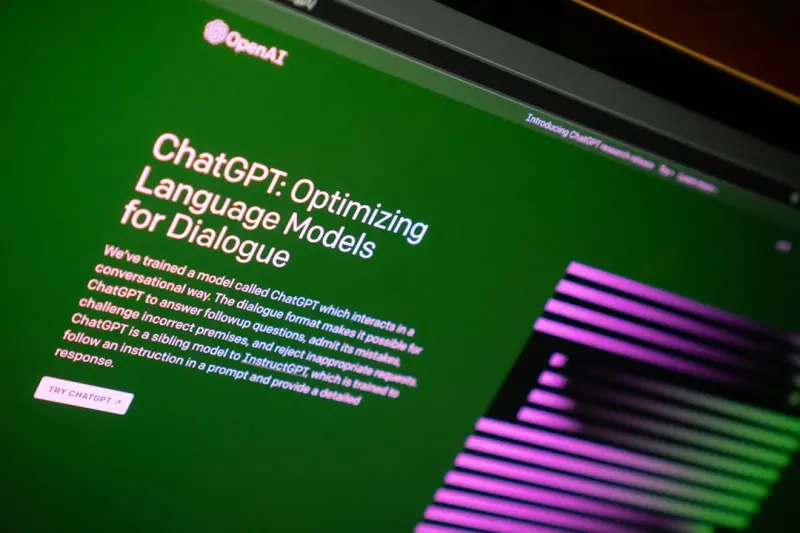
When I first started experimenting with ChatGPT for my own SaaS startup, the most striking thing wasn’t how well it answered a question—it was how quickly it became an unplanned member of the sales team. In the noise of feature roadmaps, pricing models, and endless customer‑feedback loops, I discovered a hidden revenue engine that most B2B SaaS leaders still overlook: treating conversational AI as a strategic partner in the sales cycle.
The hidden revenue engine behind the chatbot
Most companies deploy ChatGPT as a support desk or a FAQ bot, assuming its value is limited to “answering tickets faster.” That mindset caps the AI’s potential. The real power lies in embedding conversational intelligence directly into the buyer’s journey, from the first inbound query to post‑sale adoption. When the AI can surface relevant case studies, suggest pricing tiers, and even draft a preliminary contract, the friction that normally drains a sales funnel evaporates.
Consider this scenario: a prospect lands on your pricing page, clicks “Talk to an Expert,” and is greeted by a ChatGPT‑driven assistant that instantly pulls data from your CRM, tailors a demo agenda, and schedules a calendar invite—all while capturing objections in real‑time. The prospect never has to wait for a human SDR; the AI does the heavy lifting, freeing your sales team to focus on high‑value negotiations.
From lead to loyalty: AI‑driven touchpoints
Embedding AI into every touchpoint creates a continuity of experience that feels personalized at scale. Below are the stages where ChatGPT can be a game‑changer:
- Discovery – ChatGPT can parse a prospect’s LinkedIn profile, recent news, and industry trends, then craft an opening line that demonstrates relevance before the first human contact.
- Qualification – By asking calibrated, data‑driven questions, the bot can score leads in real‑time, populating the CRM with a “fit score” that sales reps trust.
- Demo preparation – The AI drafts a customized demo script, pulling product features that align with the prospect’s pain points, and even suggests a ROI calculator based on the company’s size and industry.
- Negotiation support – When pricing discussions begin, ChatGPT can surface approved discount thresholds, compare competing plans, and generate a draft proposal that complies with internal policies.
- Onboarding & adoption – Post‑sale, the same conversational layer can guide new users through feature walkthroughs, answer integration questions, and surface best‑practice resources without human intervention.
- Renewal nudges – By continuously monitoring usage patterns, the AI can anticipate churn signals and proactively reach out with tailored renewal offers or upsell opportunities.
What ties all these stages together is a single source of truth: the conversation history. Every interaction feeds back into the system, enriching the AI’s context and sharpening future recommendations.
Building a prompt‑powered playbook
To unlock these capabilities, you need more than a generic “ChatGPT integration.” You need a prompt engineering playbook that aligns with your sales methodology. Here’s a quick framework to get you started:
- Define personas – Map out the distinct buyer archetypes (e.g., CTO, VP of Operations, Procurement Lead). For each persona, draft a set of core objections and value metrics.
- Craft modular prompts – Write reusable prompt blocks that can be stitched together based on the conversation flow. For example, a “pricing intro” block that pulls the latest tier data, followed by an “objection handling” block that references case studies.
- Integrate live data – Hook the AI to your product analytics, CRM, and pricing APIs so prompts are always up‑to‑date. The AI should never recite stale pricing tables.
- Establish guardrails – Use system messages to enforce tone, compliance, and brand voice. This is where you prevent the bot from making unauthorized commitments.
- Iterate with real conversations – Continuously review transcript logs, identify breakdowns, and refine prompts. Think of each iteration as a sprint in a product development cycle.
When you treat prompt design as a living artifact, you create a scalable “sales knowledge base” that evolves faster than any traditional playbook. It’s also an excellent way to low‑code innovators can quickly prototype new conversational flows without deep engineering effort.
Metrics that matter
As with any revenue‑impact initiative, you need a clear set of KPIs to prove ROI:
- Lead‑to‑MQL conversion time – Measure the average minutes it takes for a visitor to become a Marketing Qualified Lead after engaging with the bot.
- Demo booking rate – Track the percentage of chat sessions that result in a scheduled demo.
- Average deal size – Compare deals closed with AI‑assisted qualification versus traditional cold outreach.
- Time‑to‑first‑value (TTFV) – For new customers, measure how quickly they achieve their first measurable outcome after onboarding with the AI’s guidance.
- Churn reduction – Monitor churn rates for cohorts that received AI‑driven renewal nudges versus a control group.
When you overlay these metrics with the developer experience data, you’ll notice a correlation: smoother API integrations lead to higher bot reliability, which directly improves conversion numbers.
Implementing ChatGPT without disruption
Many leaders fear that inserting a conversational layer will break existing workflows. The key is to adopt a phased rollout:
- Pilot on low‑stakes pages – Start with a “Contact Us” widget where the AI can collect basic info and schedule calls. Measure impact before expanding.
- Introduce a handoff protocol – When the bot detects a high‑value prospect or a complex objection, it should seamlessly transfer the session to a human SDR, preserving the conversation context.
- Parallel monitoring – Run the AI alongside existing lead capture forms for a month. Compare data quality, response times, and user satisfaction scores.
- Feedback loop – Give reps a simple “thumbs‑up/thumbs‑down” mechanism to flag bot missteps. Feed this back into prompt refinement.
- Scale responsibly – Once confidence is built, expand the bot’s scope to pricing negotiations, contract drafting, and even post‑sale support.
By treating the AI as an augmentative tool rather than a wholesale replacement, you mitigate risk and build internal buy‑in from sales, legal, and compliance teams.
Future‑ready considerations
ChatGPT is evolving rapidly, and the next generation of models promises multimodal capabilities, real‑time sentiment analysis, and tighter integration with enterprise data lakes. Here are a few forward‑looking ideas to keep on your radar:
- Voice‑first sales assistants – Imagine a prospect calling a toll‑free number and having a voice‑enabled ChatGPT guide them through a qualification script, then automatically logging the interaction.
- AI‑generated proposals – Leverage the model’s natural‑language generation to produce fully formatted proposals with dynamic pricing tables, all compliant with your legal templates.
- Cross‑functional knowledge graphs – Combine the conversational AI with a knowledge graph that maps product features to industry regulations, ensuring every recommendation is both relevant and compliant.
- Ethical guardrails – As the AI becomes more persuasive, embed transparent disclosure statements to maintain trust and meet emerging regulations.
When you position ChatGPT as a strategic asset—not a gimmick—you’re not just keeping up with the latest tech trend; you’re building a sustainable competitive moat that aligns with the broader shift toward AI‑augmented revenue operations.
In short, the future of B2B SaaS sales is conversational, and the conversation is already happening. By thoughtfully integrating ChatGPT into each stage of the buyer’s journey, you turn every chat into a potential contract, every prompt into a playbook, and every metric into a growth signal.

Paul Flynn is a versatile freelance writer equipped with a diverse skillset and a portfolio that reflects his wide-ranging interests and expertise. From crafting compelling website copy and engaging blog posts to delivering in-depth articles and meticulously researched reports, Flynn demonstrates a remarkable ability to adapt his writing style to suit various audiences and purposes.
Related Posts
ChatGPT in 2026: My Insider Playbook for AI‑Driven Content Mastery
Discover my 2026 playbook for leveraging ChatGPT to boost productivity, create sustainable content, ... Read More

ChatGPT as the Quiet Co‑Pilot for B2B SaaS Product Discovery
Laura Wilson shares her hands‑on experience turning ChatGPT into a quiet co‑pilot for product di... Read More
ChatGPT as Your Everyday Storytelling Sidekick
Explore how ChatGPT can become a creative co‑pilot, helping you brainstorm, refine voice, and stre... Read More
Top Posts

Why Every SaaS Team Needs a Celebration Playbook
Celebrations aren’t just feel‑good moments—they’re a strategic lever. Discover how SaaS teams can embed data‑driven recognition into their roadmap, tu...Read More

The Quiet Power of Conversational Email: Turning Inboxes into Communities
Discover how treating email as a conversation, leveraging AI, and focusing on behavior over demographics can revitalize your newsletters and build loyal inbox c...Read More

Reimagining Child Safety: From Smart Homes to Community Watch 2.0
A fresh look at child safety shows how smart home sensors, sustainable cleaning routines, neuro‑sensitive design, and digital neighborhood networks together c...Read More

Recognizing the Most Common Clinical Signs of Lyme Disease in Dogs
Lyme disease, or canine borreliosis, stands as one of the most clinically relevant and geographically widespread vector-borne illnesses affecting dogs globally....Read More
0 Comments
Post Comment
You will need to Login or Register to comment on this post!