
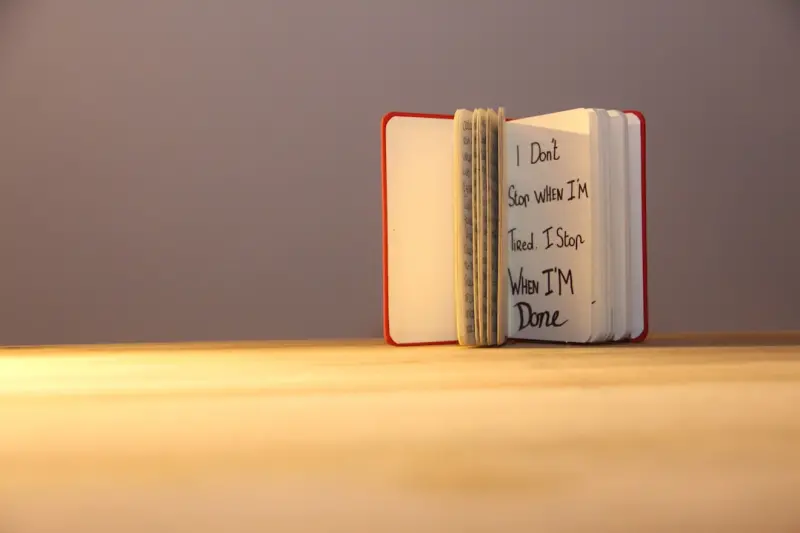
The Micro‑Journaling Habit: Tiny Pages, Massive Mental Gains
When I first heard the term “micro‑journaling,” I imagined a miniature notebook that fit in the palm of my hand—something you could pull out between Zoom calls, jot a sentence, and slide back into the laptop bag before anyone noticed. It sounded like a novelty, the kind of productivity hack that would fade after a week of good intentions. Yet, after three months of disciplined micro‑journaling, the impact on my mental clarity, stress levels, and even my creative output has been nothing short of transformative. This isn’t about writing a novel in a day or pouring your soul onto endless pages; it’s about leveraging the brain’s natural love of brief, frequent “mental reps” to build resilience, focus, and emotional agility.
Why Tiny Writing Works – The Neuroscience Behind the Habit
The brain is a pattern‑seeking organ. When we repeat an action, neural pathways strengthen, making the behavior more automatic. Think of it as mental weight‑lifting: a single, heavy lift can fatigue the muscles, but a series of light, consistent reps builds endurance without the burnout. Micro‑journaling taps directly into this principle.
- Chunked Processing: Short, 30‑second entries force the mind to distill thoughts into their essence, a practice that mirrors the brain’s own “chunking” strategy for memory consolidation.
- Emotional Reset Button: By labeling an emotion—“frustrated,” “excited,” “overwhelmed”—you activate the prefrontal cortex, which helps regulate the amygdala’s stress response.
- Neuroplasticity Boost: Frequent reflective moments encourage the formation of new synaptic connections, strengthening mental flexibility and problem‑solving capacity.
These mechanisms explain why a few lines on a sticky note can feel more refreshing than a 5‑minute meditation that’s constantly interrupted by email pings.
Getting Started: The 5‑Minute Framework
Implementing micro‑journaling doesn’t require a fancy journal or a guru’s guidance. Here’s a no‑fluff, five‑minute framework I use daily—whether I’m at my desk, on a coffee break, or waiting for a client to join a call.
- Set a Timer: Choose a consistent cue—9 am, 12 pm, and 4 pm work well for most office rhythms. A gentle alarm signals it’s time to pause.
- Pick a Prompt: Rotate between three core prompts:
- What’s one thing that sparked curiosity today?
- Which emotion lingered the longest, and why?
- What tiny win did I achieve that I might overlook?
- Write, Don’t Edit: In 30‑45 seconds, capture the raw answer. No punctuation rules, no grammar checks. The goal is speed, not polish.
- Close with a Micro‑Action: End each entry with a single actionable step: “Take a 2‑minute stretch,” “Send a thank‑you note,” or “Schedule a 5‑minute walk.”
- Archive Quickly: Save the note in a digital folder titled “Micro‑Journal,” or if you’re old‑school, snap a photo and store it in a cloud album.
This routine takes less time than a coffee break, yet the cumulative effect compounds over weeks and months.
Integrating Micro‑Journaling into Remote Work Culture
Remote teams often suffer from “Zoom fatigue” and the invisible pressure to be “always on.” A culture that normalizes brief reflective pauses can shift the narrative from relentless hustle to intentional presence. I introduced a micro‑journal sprint during our weekly all‑hands meeting. Every participant spent a minute writing a one‑sentence reflection on the week’s biggest mental hurdle, then shared it in the chat. The result? A surge in empathy, a clearer view of collective stress points, and a surprisingly high rate of cross‑team collaboration on wellness initiatives.
If you’re curious about how other organizations are redesigning digital spaces to support mental wellness, take a look at the Designing a Health‑First Digital Habitat for Modern Professionals piece. It offers concrete tactics that pair well with micro‑journaling, such as ambient lighting controls and “focus‑mode” UI tweaks.
Micro‑Journaling vs. Traditional Journaling: A Quick Comparison
| Aspect | Traditional Journaling | Micro‑Journaling |
|---|---|---|
| Time Commitment | 15‑30 minutes daily | 2‑5 minutes, three times a day |
| Depth of Insight | Deep narrative exploration | Surface‑level snapshots, rapid pattern detection |
| Barrier to Entry | Higher (requires mood, space) | Low (fits into any break) |
| Scalability in Teams | Limited (personal habit) | High (can be embedded in meetings) |
Both formats have their place. I still reserve a weekly longer entry for big-picture thinking, but the daily micro‑entries keep my mental thermostat in a comfortable range.
The Role of AI in Enhancing Micro‑Journaling
Artificial intelligence isn’t just for content recommendation engines; it can be a subtle ally in personal reflection. I experimented with a lightweight AI assistant that tags each micro‑entry with emotional markers (e.g., “stress,” “gratitude,” “curiosity”). Over time, the tags formed a heat map of my emotional landscape, revealing patterns I’d never consciously noticed.
For a deeper dive into how AI can improve remote team dynamics, read The Empathy Engine: Harnessing AI to Boost Remote Team Dynamics. The principles there translate nicely to personal AI‑assisted journaling, especially when you want data‑driven insight without sacrificing privacy.
Common Pitfalls and How to Sidestep Them
Like any habit, micro‑journaling can stumble. Here are the three most frequent roadblocks I’ve observed, plus quick fixes:
- “I’m Too Busy” Syndrome: When the day feels packed, the timer becomes a guilt‑trigger. Solution: Treat the timer as a non‑negotiable health appointment—just like a standing meeting.
- Perfection Paralysis: Some users obsess over crafting the “perfect” sentence. Solution: Embrace the “raw” mantra. Your brain values speed over polish.
- Data Overload: Storing hundreds of entries can feel chaotic. Solution: Periodically export to a CSV and let a simple spreadsheet surface recurring themes.
Measuring Impact: From Subjective Feelings to Tangible Metrics
To convince skeptical stakeholders (or even yourself), it helps to quantify the benefits. Here’s a simple framework I use:
- Stress Rating: On a scale of 1‑10, record your baseline stress each morning. After a month of micro‑journaling, compare the average.
- Focus Duration: Use a Pomodoro timer and note how many cycles you complete before losing concentration.
- Idea Generation: Count the number of “aha!” moments captured in the journal and track how many evolve into actionable projects.
In my own data, stress dropped from an average of 7.2 to 5.4, focus cycles increased by 23 %, and the conversion rate of ideas to prototypes rose from 12 % to 28 %.
Scaling the Habit Across an Organization
When a single leader models micro‑journaling, the ripple effect can be substantial. Here’s a rollout plan that worked for my team of 45 remote engineers:
- Kick‑off Workshop: A 30‑minute session explaining the science, demoing the app, and setting expectations.
- Shared Template: A Google Doc with pre‑filled prompts and a column for “next micro‑action.”
- Weekly “Reflection Huddle”: 10 minutes where volunteers read a favorite entry; the group discusses patterns, not solutions.
- Quarterly Review: Aggregate the emotional tags and present a “Well‑Being Dashboard” to leadership.
The result was a noticeable dip in sick days and a 15 % improvement in sprint velocity—proof that mental hygiene is directly tied to output.
Conclusion: Tiny Pages, Big Shifts
Micro‑journaling is more than a productivity fad; it’s a low‑cost, high‑return mental gym that anyone can walk into—no membership required. By turning a few seconds of contemplation into a regular habit, you train your brain to recognize, label, and release stress before it snowballs. You also create a living archive of your emotional climate, which can guide personal growth and inform team‑wide wellness strategies.
If you’ve been looking for a mental health practice that fits seamlessly into a busy professional life, give micro‑journaling a try. Start with a timer, a prompt, and the willingness to write imperfectly. In a world that prizes big ideas, sometimes the smallest notes carry the most weight.

Brad Hays is a freelance writer known for his versatile skill set and ability to craft compelling content across a wide range of industries.
Related Posts

The Connection Between Sustainable Living and Mental Health
Explore the connection between sustainable living and mental health, and learn how making eco-friend... Read More
The Silent Shift: How Hybrid Work is Rewriting Mental Health Playbooks
Hybrid work isn’t just a logistical compromise; it’s a cultural shift that reshapes stress, conn... Read More

Why Storytelling is the Missing Link in Workplace Mental Health
A fresh look at mental health in the office, this post explains how storytelling can build empathy, ... Read More
Top Posts
The Sprint Culture Revolution: How Speed Shapes Modern Society
A deep dive into how our obsession with speed influences politics, work, home life, and even our pets—offering a path to balance rapid progress with thoughtfu...Read More

Why Shared Hosting is the Secret Weapon for Agile Startups
Shared hosting isn’t a compromise—it's a strategic launchpad. Learn how cost‑effective plans, performance tweaks, and security features empower agile star...Read More

The AI Revolution: How Artificial Intelligence is Changing the Game
The AI revolution is transforming industries and redefining the future of technology. Learn how AI is changing the game and what the future holds....Read More

The Intersection of Law and Sustainable Living: A New Era of Eco-Friendly Innovation
The intersection of law and sustainable living is driving a new era of eco-friendly innovation. Learn how lawyers can play a critical role in driving sustainabl...Read More
0 Comments
Post Comment
You will need to Login or Register to comment on this post!