
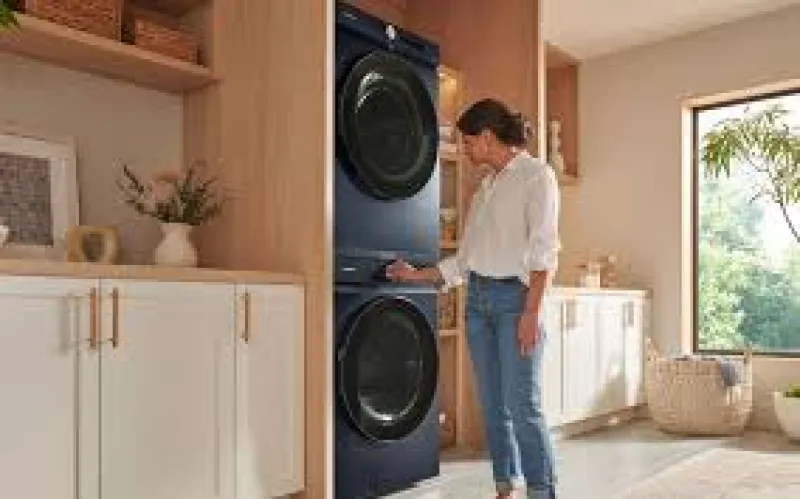
For decades, the laundry room has been governed by a binary choice: sacrifice floor space for a stacked unit, or sacrifice efficiency for the promise of convenience with an all-in-one washer-dryer combo. Historically, the latter has been viewed with a healthy dose of skepticism. The "combo" category, often plagued by interminable cycle times, excessive heat buildup, and a persistent inability to actually dry a full load, has long been the compromise appliance—a desperate solution for apartment dwellers and urban professionals with nowhere else to turn.
However, the tide is turning. With the launch of their latest all-in-one wash and dry solutions-specifically the LG WashTower and the advanced ventless heat pump combos—LG is not merely iterating; they are solving the structural and mechanical failures that have defined the category for thirty years.
The "Combo" Conundrum: A History of Compromise
To understand why LG’s latest advancements are so significant, one must first understand the "combo" reputation. Traditional all-in-one machines, particularly those utilizing older condensing technology, were notorious for two primary failings: time and moisture management.
In these older models, the machine would wash, then switch to a drying phase that took hours, often leaving fabrics feeling perpetually damp or smelling faintly of mildewed humidity. Because they utilized water-cooled condensing, they were also ironically water-intensive during the drying cycle, adding to utility costs. Furthermore, the limited internal volume meant that users were often forced to wash half-loads to ensure the clothes wouldn’t emerge as a wrinkled mess. If you filled the drum to capacity, the dryer simply couldn't distribute air effectively.
LG has systematically dismantled these pain points, utilizing a combination of advanced heat pump technology, intelligent sensor arrays, and improved drum design.
Heat Pump Technology: The Game Changer
The cornerstone of LG’s recent success in the all-in-one market is the move toward high-efficiency, ventless heat pump technology. Unlike traditional electric dryers that rely on high-heat heating elements—which are energy-intensive and harsh on delicate fibers—LG’s heat pump system functions more like a dehumidifier.
By circulating air through a closed-loop system, the machine extracts moisture from the clothes without relying on the scorched-earth approach of traditional electric heating. For the consumer, this delivers three critical improvements:
- Fabric Longevity: Lower temperatures prevent the thermal degradation of synthetic fibers and the shrinking of natural ones. Clothes simply last longer.
- Energy Independence: Because these units are ventless, they do not require an external exhaust duct. This eliminates the "negative pressure" issue where homes lose conditioned air (heated or cooled) through the dryer vent, significantly improving the home’s overall thermal efficiency.
- True Drying Capacity: The advanced sensors in LG’s latest units monitor humidity levels in real-time, adjusting cycle duration based on the actual dryness of the load rather than a static timer. This prevents the "damp-cycle" trap that plagued earlier generations.
Solving the "Time" Barrier with AI-Driven Efficiency
The most frequent criticism of all-in-one units has been the "cycle time" dilemma. The notion that you start a load in the morning and it isn't ready until dinner is a dealbreaker for modern households.
LG has tackled this through its proprietary AI DD (Artificial Intelligence Direct Drive) and TurboWash 360 technology. By utilizing deep learning, the washer identifies the weight and fabric softness of a load and automatically selects the optimal wash motion. This isn't just a gimmick; it allows for a more aggressive yet fabric-safe cleaning process that reduces wash time without compromising results.
When paired with the seamless transition to the drying cycle, the total elapsed time has been slashed significantly. While physics dictates that an all-in-one machine will rarely beat a dedicated high-end industrial dryer, LG’s latest models have moved the finish line from "eventually" to "within the workday." For a busy professional, the ability to leave for the office and return to clean, dry clothes—without the need to perform the "laundry switch" mid-day—is a functional upgrade that effectively earns them time back in their schedule.
Design and Ergonomics: The Aesthetic and Spatial Pivot
Beyond the mechanical improvements, LG has addressed the ergonomic failure of standard combos. Often, these machines were tucked away in dark corners, featuring cryptic displays and uninspired aesthetics.
The shift toward the LG WashTower design language has elevated the appliance from a utility box to a statement piece. By integrating the control panel in the center of the unit—accessible to those of all heights—LG has solved a major usability hurdle. The integration of "Smart Pairing" also means the dryer "talks" to the washer, pre-setting the drying duration based on the wash cycle that was just completed. This eliminates the user error of choosing the wrong heat setting, a common cause of damaged laundry.
From a spatial perspective, these units are the ultimate "space-makers." For homeowners looking to convert a laundry closet into a home office, or urban dwellers looking to maximize square footage in a high-rise, the ability to remove the dryer vent and the bulky secondary unit is invaluable. It is a return to a minimalist ethos where high performance does not require a large physical footprint.
The Reliability Factor and Intelligent Maintenance
A major hurdle for any complex appliance is the concern over maintenance. An all-in-one machine has twice the mechanical complexity of a single-purpose unit, which historically led to higher repair rates.
LG has mitigated this through proactive connectivity via the ThinQ app. By utilizing real-time diagnostics, the machine can alert the user to potential issues—such as a clogged lint filter or a water pressure anomaly—before they lead to a catastrophic failure. This form of "predictive maintenance" changes the relationship between the machine and the owner; instead of the unit being a black box that eventually breaks, it becomes a transparent system that provides guidance on its own health.
Conclusion: A New Standard for Home Utility
The latest generation of LG washer-dryer combos represents a maturation of the category. Critics who still cling to the memories of the sluggish, ineffective combos of the early 2000s are looking at a snapshot of a bygone era.
By marrying high-efficiency heat pump technology with AI-driven cycle optimization and a refined, ergonomic design, LG has effectively neutralized the primary weaknesses of the all-in-one format. They have transitioned the product from a "necessary evil" for small spaces into a premium, high-performance solution for any modern home.
In an era where convenience is the ultimate luxury, LG’s latest innovation provides the most precious commodity of all: the freedom to step away from the laundry room entirely, confident that the task is managed, efficient, and, most importantly, completed to perfection. For the consumer, the question is no longer whether an all-in-one machine is "good enough," but rather why anyone would choose the manual labor of a two-machine setup when the alternative is this seamless.

Laura Wilson is a freelance writer specializing in the dynamic and ever-evolving field of health. With a passion for translating complex medical information into accessible and engaging content, Laura brings a wealth of knowledge and a fresh perspective to topics ranging from preventative care and nutrition to cutting-edge research and innovative treatments.
Related Posts

Repairable Design: Why the Next Generation of Home Appliances Must Be Built to Last
Explore why durable, repair‑friendly appliances matter, how modular designs and IoT diagnostics ex... Read More

The Predictive Maintenance Wave: Extending the Life of Everyday Appliances
Explore the rise of predictive maintenance for household appliances, how sensors and AI prevent brea... Read More
The Future of Home Appliances: How Sustainable Living is Revolutionizing the Industry
The home appliance industry is undergoing a significant transformation, driven by growing concerns a... Read More
Top Posts

Beyond the Gate: Building a Holistic Safety Net for Kids at Home
A modern parent’s guide to merging physical child‑proofing with digital vigilance, using smart sensors, eco‑friendly design, and playful safety drills to ...Read More

Reimagining Insurance: Real‑Time Data, Trust, and the Human‑Centric Future
A deep dive into how insurers can break data silos, adopt real‑time orchestration, and use AI to shift from reactive payouts to proactive risk collaboration, ...Read More

The Intersection of Holistic Living and Digital Strategy
Discover the powerful connection between maintaining physical health through quality nutrition and sustaining a high-performing website through expert digital s...Read More

Unwanted Scam Calls Are Out of Control, How to Stop Them
The modern smartphone, once a marvel of connectivity, has increasingly become a conduit for agitation. For many professionals, the chime of an incoming call no ...Read More
0 Comments
Post Comment
You will need to Login or Register to comment on this post!