

Scam Fatigue Is Killing B2B Relationships – Here’s How to Turn the Tide
Picture this: you’re sipping a lukewarm coffee, inbox pinging with the latest demo request, and a fresh “urgent security audit” email lands on your screen. The subject line screams urgency, the sender pretends to be a partner you’ve worked with for years, and the attachment promises a quick fix to a problem you didn’t even know existed. Your heart does a little hop, you feel the familiar rush of “maybe this is the one that finally cracks the vault.” Then you remember the last time a “quick fix” turned your sandbox into a smoldering wreck.
Scam fatigue is real, and it’s not just a buzzword for IT departments. It seeps into sales pipelines, product roadmaps, and even the way we craft our brand stories. In the fast‑moving B2B SaaS arena, where every deal is a dance between trust and risk, the cost of a single misstep can be a lost contract, a bruised reputation, or a cascading wave of churn.
In this deep‑dive, I’m pulling back the curtain on the psychology of modern scams, the subtle tactics that make them slip past seasoned professionals, and the concrete playbook you can adopt today to protect your organization and, more importantly, to rebuild the confidence that scammers are trying to erode.
The New Face of Fraud – From Phishing to “Persuasion‑as‑a‑Service”
Scams have evolved from generic phishing emails to hyper‑personalized, data‑driven persuasion campaigns. Think of it as Persuasion‑as‑a‑Service (PaaS): a suite of tools that harvest publicly available data, stitch together AI‑generated narratives, and deliver them at scale. These aren’t the clunky, misspelled spam messages of a decade ago. They’re sleek, context‑aware, and often masquerade as legitimate business communication.
Key ingredients of a modern scam:
- Contextual Credibility: The scammer references a recent product launch, a shared contact, or a specific KPI that only insiders would know.
- Omnichannel Delivery: The bait appears not just in email, but also on LinkedIn, Slack, and even via SMS.
- AI‑Generated Language: Natural‑language models produce prose that feels native to your brand’s tone, making detection harder.
- Urgency Triggers: “Your account will be suspended in 24 hours,” or “We need your approval before the quarterly audit closes.”
When you combine these elements with a deep understanding of SaaS buying cycles, you get a fraud engine that can bypass traditional security filters and land directly in the hands of decision‑makers.
Why Traditional Defenses Are Failing
Most companies still rely on rule‑based email filters, password policies, and occasional security awareness training. Those are essential, but they’re akin to putting a lock on a window while the front door remains wide open.
Here’s where the gap widens:
- Human‑Centric Attack Vectors: Scammers target the people who make purchasing decisions, not just the IT gatekeepers.
- Data Overload: In a world where every SaaS tool collects telemetry, the sheer volume of data makes manual review impossible.
- Speed of Execution: A well‑crafted social engineering ploy can move from inbox to click within minutes, outpacing any manual response.
Consequently, the “security‑first” mantra needs a broader lens—one that includes behavioral verification and contextual risk assessment as everyday business processes.
Building a Scam‑Resilient Culture (Without Killing Creativity)
Here’s the uncomfortable truth: you can’t eliminate fraud, but you can make it so costly for the attacker that they look elsewhere. The secret sauce is a culture where skepticism is a shared value, not a sign of paranoia.
1. Embed Verification into Your Workflow
Every time a partner asks for a bank transfer, a contract amendment, or a privileged access token, the request should trigger a verification step. This can be as simple as a secondary approval channel (e.g., a phone call to a known contact) or as sophisticated as an AI‑driven risk scoring engine that flags anomalies based on historical patterns.
For example, if a long‑standing client suddenly requests a change in billing terms that deviates from the norm, the system should flag it and route it to a senior manager for manual review. The goal isn’t to add friction for legitimate business; it’s to create a safety net for the rare outlier.
2. Turn Security Into a Business Differentiator
Remember the old adage: “People buy on emotion, justify with logic.” In a crowded SaaS market, you can flip the script—make security an emotional hook. When you’re pitching to a CFO, frame your fraud‑prevention capabilities as a competitive edge of safety that directly protects their bottom line.
Case in point: a mid‑size fintech firm chose a vendor not because of the fancier UI, but because the vendor could demonstrate a “zero‑trust” approach to partner communications. The win was immediate, and the churn rate dropped dramatically after the client felt protected.
3. Leverage AI—But Keep a Human in the Loop
AI can sniff out anomalous language patterns, flag suspicious domains, and even simulate a “what‑if” scenario for a new request. However, AI should never be the final arbiter. Human intuition, especially from seasoned account managers, can catch subtleties that models miss—like a tone change that suggests urgency was artificially induced.
Integrating AI into your fraud workflow is about rethinking collaboration between humans and machines. Let AI surface the outlier, then let a trusted team member decide the next move.
Practical Playbook: 7 Immediate Actions to Fortify Your Frontline
- Audit Communication Channels: Map every inbound request pathway (email, chat, ticketing system, phone). Identify where “quick approvals” happen and insert a verification checkpoint.
- Implement Multi‑Factor Confirmation for Critical Actions: Require a second factor—whether a signed PDF, a voice call, or a secure token—when changing payment details or granting admin rights.
- Deploy Real‑Time Risk Scoring: Use a lightweight AI model that scores each inbound request based on sender reputation, language anomalies, and request context. Set thresholds for automated escalation.
- Educate, Don’t Lecture: Replace annual “phishing drills” with scenario‑based workshops that mirror actual sales cycles. Show how a scam could appear during a product demo or a renewal negotiation.
- Document “Trusted” Interaction Patterns: Build a knowledge base of how legitimate partners normally communicate—tone, signature blocks, response times. Use this as a baseline for anomaly detection.
- Introduce “Security Champions” in Each Department: Empower a senior team member to be the go‑to person for any suspicious request. Their authority can cut through the “it’s probably fine” reflex.
- Measure the ROI of Fraud Prevention: Track metrics such as “time to detect,” “false‑positive rate,” and “cost saved per incident.” Use these figures to justify ongoing investment in security tools.
The Human Element: Why Empathy Beats Fear
Scammers prey on fear—fear of missing out, fear of a missed deadline, fear of a data breach. If your internal culture is constantly walking on a tightrope of anxiety, your team will either over‑react (blocking legitimate opportunities) or under‑react (ignoring red flags).
Empathy is your antidote. Encourage open conversations about near‑misses. Celebrate the “I called to verify” moment just as loudly as you celebrate a closed deal. When verification becomes a badge of professionalism rather than a bureaucratic hurdle, you cultivate a resilient mindset that naturally filters out fraud.
Looking Ahead: The Future of Scam Defense in SaaS
In the next wave of B2B interactions, we’ll see three converging trends:
- Decentralized Identity Verification: Blockchain‑based DID solutions will let parties prove who they are without exposing personal data, reducing the attack surface.
- Behavioral Biometrics: Continuous monitoring of keystroke dynamics, mouse movement, and even typing cadence will create a “digital fingerprint” that flags deviations in real time.
- Zero‑Trust Collaboration Platforms: Instead of trusting a network perimeter, every interaction will be authenticated and authorized on a per‑transaction basis.
These technologies will shift the balance back toward the defender, but they require foresight and early adoption. Companies that embed these capabilities now will not only dodge scams—they’ll position themselves as the gold standard for secure, trustworthy SaaS experiences.
Conclusion: Turn Scam Awareness Into a Growth Engine
Scam fatigue doesn’t have to be a death knell for sales velocity. By turning vigilance into a strategic advantage, you not only protect your revenue but also differentiate your brand in a market where trust is increasingly scarce.
Remember, the most effective defense is a combination of smart processes, purposeful technology, and a culture that treats verification as a sign of professionalism—not paranoia. When you get that balance right, you’ll find that the same mechanisms that stop fraud also streamline onboarding, reduce churn, and create a reputation that competitors will envy.
Stay skeptical, stay secure, and let your customers feel the confidence that only a truly scam‑resilient organization can provide.

Jimmy Anand is a content creator that gets inspired by many aspects of life, internet or whatever inspires him at that moment. When he's not online he's gaming and when he is not gaming he is online trolling discussion boards.
Related Posts

Inside the Scam Jungle: Outsmarting Fast‑Moving Cons
A personal deep‑dive into the sprint‑style tactics scammers use—and how you can turn that spee... Read More
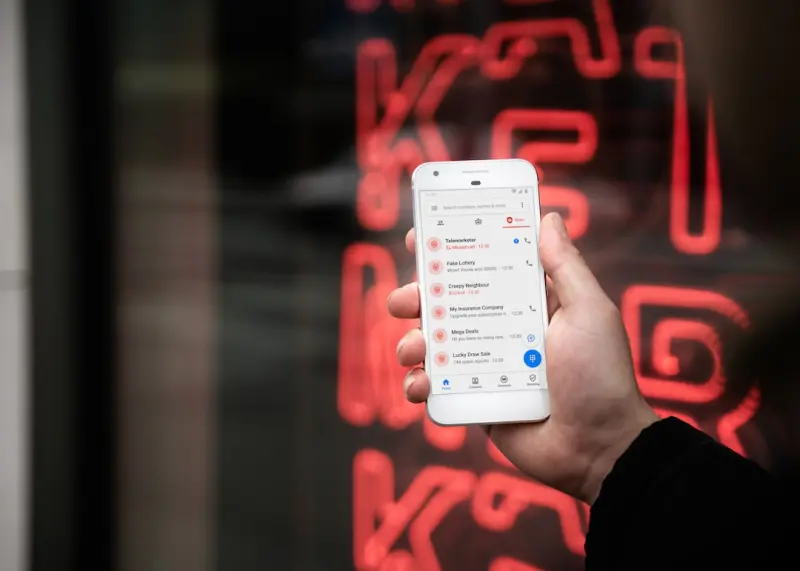
Beyond the Hook: Outsmarting Modern Business Scams
Scams have become a strategic weapon against enterprises, blending AI‑driven deepfakes with sophis... Read More

Protecting Your Plans: Don't Let Scammers Wreck Your Summer or Big Night Out
The sun is shining, the days are getting longer, and thoughts naturally turn to eagerly anticipated ... Read More
Top Posts

Social Audio: Amplifying B2B Thought Leadership in Real Time
Social audio is reshaping B2B marketing by offering real‑time, voice‑first conversations that build credibility, generate leads, and provide instant product...Read More

Why “AI Slop” is Coming to Your Living Room
In the evolution of the living room, the television set has undergone a series of radical identity shifts. It began as a flickering window into the world, evolv...Read More

Want Knives That Stay Sharp? First, Stop Doing These 7 Things
There’s an undeniable satisfaction that comes with gliding a perfectly sharp knife through a ripe tomato, a crusty loaf of bread, or a tender piece of meat. I...Read More

Turning Conversational AI Into Your Next SEO Superpower
Discover why embracing conversational AI, structured data, and intent-driven content is the key to future‑proofing your SaaS SEO strategy, boosting voice sear...Read More
0 Comments
Post Comment
You will need to Login or Register to comment on this post!