

Why the Traditional VPS Model Is Getting a Makeover
When I first spun up a virtual private server back in the early days of cloud, it felt like stepping onto a private island with a single hammock and a limited pantry. You had full root access, but you also had to cook every meal yourself, fend off the occasional storm, and pray the power never went out. Fast forward to today, and the VPS landscape is no longer a solitary island—it’s a bustling archipelago of micro‑environments, edge‑ready nodes, and developer‑first marketplaces that let you launch, iterate, and scale faster than a sprint on a high‑performance bike.
From “One‑Size‑Fits‑All” to “Fit‑For‑Purpose”
For years the industry mantra was “bigger is better.” Enterprises stacked RAM, cranked up CPU cores, and paid for the luxury of excess. That model worked for monolithic apps that barely moved. But modern workloads—real‑time analytics, AI inference, IoT telemetry—demand elasticity at the edge. A single, monolithic VPS in a distant data center adds latency that can cripple user experience. The new wave of purpose‑built VPS offerings lets you pick a micro‑profile that matches the exact resource fingerprint of your service.
Edge‑Ready VPS: Bringing Compute Closer to the User
Imagine you’re delivering personalized video thumbnails to a global audience. The moment a user clicks, your server must fetch the raw video, run a lightweight ML model, and serve the generated image—all within a few hundred milliseconds. If your VPS lives on a West Coast data center while the user is in Southeast Asia, you’re already fighting a geographic time‑lag. Edge‑ready VPS providers now colocate virtual instances in regional POPs (points of presence), reducing round‑trip times to single‑digit milliseconds.
What makes this shift possible?
- Container‑Friendly Hypervisors: Modern hypervisors expose a thin container layer, allowing you to spin up a VPS that feels like a full VM but runs with the speed of a container.
- Automated Resource Slicing: Instead of static RAM/CPU allocations, providers use AI‑driven workload profiling to dynamically slice resources, ensuring you only pay for what you actually need at the edge.
- Zero‑Trust Networking: Edge nodes often sit outside traditional corporate perimeters. Built‑in zero‑trust networking models keep traffic encrypted and authenticated without the overhead of VPNs.
Developer‑First Marketplaces: The New App Store for Servers
If you’ve ever struggled with manually installing LAMP stacks, configuring firewalls, or hunting down the right PHP version, you’ll love the emergence of developer‑first VPS marketplaces. These platforms bundle pre‑configured “stack images”—think of them as app store listings for servers. One click, and you have a ready‑to‑go WordPress environment, a Node.js runtime with the latest LTS, or even a GPU‑enabled instance for model inference.
These marketplaces also integrate with low‑code toolbelt solutions, letting product teams prototype backend services without writing a single line of Terraform or CloudFormation. The result? Faster MVP cycles and a tighter feedback loop between engineering and product.
Cost Transparency: No More “Mystery Bills”
One of the biggest pain points of legacy VPS contracts was the opaque billing model. You’d receive a monthly invoice that looked like a cryptic crossword—“compute hours,” “network egress,” “storage I/O.” Today’s VPS providers have embraced usage‑based pricing dashboards that break down each metric in real time. You can set alerts, auto‑scale down during off‑peak hours, and even schedule “sleep” periods for non‑critical instances.
Here’s a quick checklist to keep your VPS spend in check:
- Enable auto‑scaling groups that spin down idle VMs after a configurable cooldown.
- Tag every instance with project and owner metadata—most platforms let you filter costs by tag.
- Leverage spot or pre‑emptible instances for batch workloads; they’re up to 80% cheaper.
- Monitor network egress; keep static assets on a CDN to avoid costly cross‑region traffic.
Security Reimagined: From Perimeter to Identity
Security used to be a perimeter problem—firewalls at the data center gate. In the era of distributed VPS nodes, that model collapses. The new security paradigm is identity‑centric. Each micro‑VPS gets its own cryptographic identity, and service‑to‑service communication is signed with short‑lived tokens. This approach dovetails nicely with the competitive edge of safety that modern hybrid businesses are chasing.
Key practices include:
- Adopt OS hardening templates that automatically disable unnecessary services.
- Use ephemeral SSH keys that rotate every 24 hours.
- Implement runtime vulnerability scanning that blocks processes attempting to execute known exploit patterns.
VPS for AI Model Serving: A Cost‑Effective Alternative to Dedicated GPUs
Many startups assume that serving AI models requires a dedicated GPU server farm. In reality, the majority of inference workloads can run efficiently on CPU‑optimized VPS instances, especially when you employ quantization and model pruning techniques. For bursty workloads, you can temporarily spin up a GPU‑enabled micro‑VPS for the duration of the spike and then let it retire, saving a chunk of the cost you’d incur with a permanent GPU cluster.
Practical steps to get started:
- Profile your model with
torch.compileor TensorFlow XLA to see how it performs on CPUs. - Containerize the model using Docker and push it to a private registry.
- Deploy the container to a CPU‑optimized VPS with auto‑scaling hooks that trigger a GPU node only when latency thresholds are breached.
The Future: Serverless‑VPS Hybrids
Serverless functions have taken the industry by storm, but they’re not a silver bullet for every use case. You still need persistent state, custom networking, and sometimes root access. The emerging hybrid model—call it “Serverless‑VPS”—lets you attach a tiny, always‑on VPS to a serverless function, giving you the best of both worlds: instant scaling on demand and a stable foothold for stateful processes.
Picture a real‑time chat app: the message broker runs on a lightweight VPS that holds a persistent TCP socket, while the message processing logic lives in a serverless function that scales per message volume. The VPS stays “warm,” eliminating cold‑start latency, while the function handles the heavy lifting.
Actionable Playbook: Transitioning Your Legacy VPS to a Modern Stack
Ready to future‑proof your infrastructure? Follow this step‑by‑step playbook:
- Audit Current Workloads: List each VPS, its CPU/RAM usage, and network patterns.
- Map Workloads to Profiles: Identify which can migrate to edge‑ready micro‑VPS, which need GPU acceleration, and which are best suited for serverless‑VPS hybrids.
- Choose a Provider with Marketplace Support: Pick a vendor that offers pre‑baked stack images and a transparent pricing dashboard.
- Automate Deployment: Use Infrastructure‑as‑Code tools (Terraform, Pulumi) to codify the new architecture. Include tagging for cost attribution.
- Implement Security Baselines: Apply OS hardening, rotate keys, and enable zero‑trust networking from day one.
- Monitor & Iterate: Set up observability pipelines (metrics, logs, traces) to watch latency, cost, and security alerts. Adjust resource profiles quarterly.
Closing Thoughts
Virtual Private Servers have evolved from static, monolithic boxes into a fluid, developer‑centric ecosystem that can sit at the edge, serve AI workloads, and even partner with serverless functions. If you’re still treating your VPS like a legacy VM, you’re leaving performance, cost, and security on the table. Embrace the modular, purpose‑built approach, and you’ll find that the “private” part of VPS is no longer a restriction—it’s a launchpad for innovation.

Shawn DesRochers is a certified Microsoft technician and Programmer with 30+ year's experience. He has written many reviews on computer related products, software, and SEO related topics. When he's not writing reviews he can be found at one of the Oldest Directories Online Blogging Fusion Business Directory which he is the CEO of.
Related Posts

Unlocking the Hidden Potential of Virtual Private Servers for Modern Enterprises
A deep dive into why VPS remains a strategic asset for enterprises, covering compliance sandboxes, A... Read More

Why a Virtual Private Server Is the Unsung Hero of Modern SaaS Ops
A Virtual Private Server offers predictable pricing, deep customization, and consistent performanceâ... Read More
Unlocking the Hidden Power of Modern VPS for Scalable SaaS Solutions
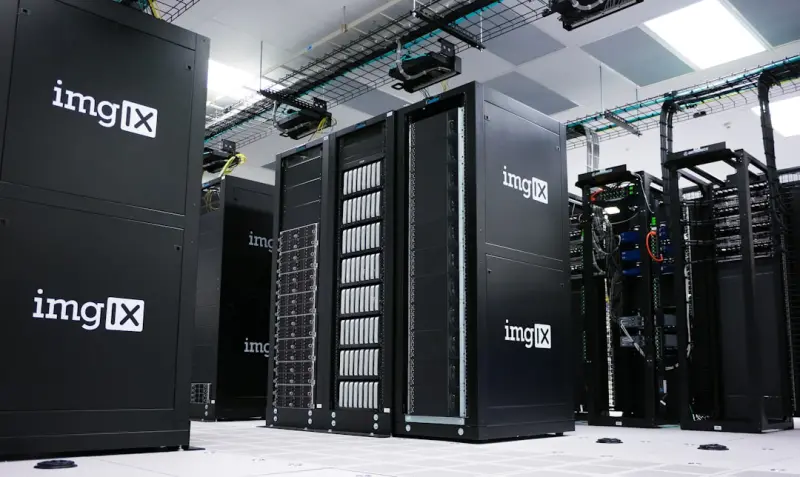
A modern VPS combines dedicated CPU cores, NVMe storage, and hybrid networking to become a strategic... Read More
Top Posts

Intent‑Driven Link Building: Transforming Backlinks into Trust Engines
Link building today is more than a numbers game—it's about embedding your brand into high‑intent content that guides prospects through the buyer journey. Le...Read More

How Enzyme Cleaners are Redefining Sustainable Office Hygiene
Enzyme cleaners use natural catalysts to break down grime, offering a low‑impact alternative to chemical detergents. Learn how to implement them in your works...Read More

5 Email Verification Tools That Keep Bounce Rates Low
In today’s hyper‑connected marketplace, a single mis‑directed email can erode the credibility of an entire campaign. Marketers invest heavily in crafting ...Read More
This Small Security Camera Is My New Favorite No-Subscription Choice
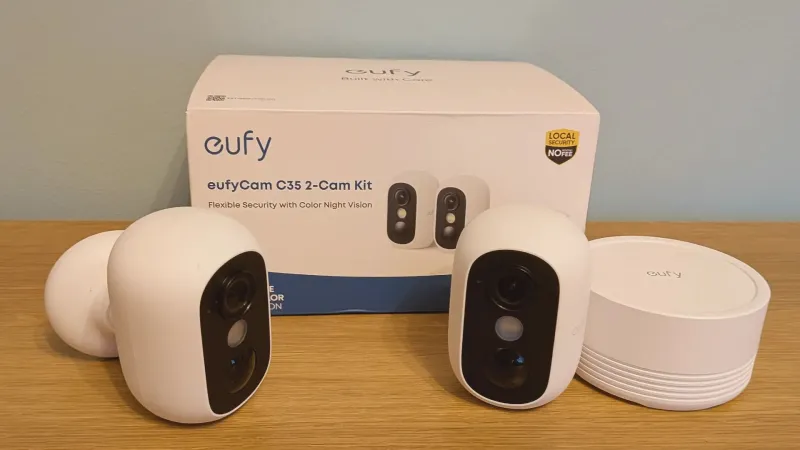
For years, the smart home security market has operated on a "razor and blade" business model. We buy the hardware—often at a premium—only to realize that th...Read More
0 Comments
Post Comment
You will need to Login or Register to comment on this post!