

Why “Content Marketing as a Service” Is the Missing Piece in Modern SaaS Growth
When I first stepped into the SaaS arena, I thought content marketing was a static, once‑a‑month blog schedule. Fast forward a few product releases, and I’m still amazed at how many teams treat content like a side‑project rather than a revenue engine. The truth is, the most successful SaaS companies have stopped asking “What content should we create?” and started asking “How can we turn content into a continuously delivered service that scales with our product?”
The Evolution from “Campaign” to “Service”
Traditional B2B content marketing has always been campaign‑centric. You launch a whitepaper, promote it for a week, and then move on to the next piece of collateral. That model works for short‑term awareness, but it leaves a massive gap when you need ongoing education for complex products that evolve every quarter.
Think about the customer journey for a typical SaaS solution: discovery → trial → onboarding → expansion → renewal. Each of these stages demands fresh, relevant content that speaks directly to the user’s current pain points. When you treat content as a one‑off deliverable, you end up with a library of assets that quickly become stale, and your team spends valuable time hunting for something that actually fits the moment.
Content Marketing as a Service (CMaaS) flips that script. Instead of isolated campaigns, you build a service layer that continuously delivers the right piece of content at the right time, automatically adjusted by data, product updates, and user behavior.
Core Pillars of CMaaS
- Data‑Driven Personalization: Leverage usage analytics, NPS scores, and support tickets to generate micro‑segments. The content you serve to a user who just hit a new feature milestone is vastly different from someone stuck in the onboarding loop.
- Modular Content Architecture: Break every asset into reusable blocks—intro, problem statement, solution snippet, CTA, and proof points. This modularity lets you remix content on the fly without starting from scratch each time.
- Automation & Orchestration: Use a content orchestration platform to trigger delivery based on events (e.g., “User completed X tutorial”). Think of it as a content pipeline that runs parallel to your product’s CI/CD pipeline.
- Continuous Feedback Loop: Integrate real‑time metrics (open rates, click‑through, time‑on‑page) back into the content engine so the system learns what resonates and iterates automatically.
Building the Engine: A Step‑by‑Step Blueprint
1. Map the Product Lifecycle to Content Touchpoints
Start by plotting every major product event—feature releases, pricing changes, renewal windows—against the buyer’s journey. For each intersection, ask: “What knowledge gap exists right now?” This becomes your content inventory matrix.
2. Create a Content Taxonomy That Mirrors Your Product
Most SaaS teams organize content by format (blog, ebook, webinar). CMaaS demands a taxonomy that reflects functionality. For a project‑management tool, you might have buckets like “Task Automation,” “Team Collaboration,” and “Reporting Dashboards.” Aligning taxonomy with product modules makes it easier for the system to surface the right piece.
3. Adopt a Modular Authoring Workflow
Use a headless CMS that supports content blocks. When a product manager ships a new API endpoint, the content team only needs to create a “Feature Summary” block, not an entire blog post. Over time, you’ll amass a library of interchangeable components that can be assembled into newsletters, in‑app messages, or sales decks in minutes.
4. Integrate with Product Analytics
Hook into your product telemetry (e.g., Mixpanel, Amplitude). When a user triggers a “first‑time‑feature‑use” event, the orchestration layer pulls the relevant content block and pushes it via email, in‑app notification, or even a personalized help center article.
5. Leverage Automation Platforms
Tools like Zapier, Make, or native workflow engines let you define “If‑Then” rules without writing code. For example: If a user’s usage drops below 30% of the average, then deliver a “Getting More Value” micro‑guide.
6. Measure, Iterate, Scale
Every content interaction should feed back into a central dashboard. Track metrics like “Content‑to‑Conversion Ratio” and “Feature Adoption Lift.” Use these insights to refine your taxonomy, improve block quality, and even inform product roadmap decisions.
Why CMaaS Beats the “Content Calendar” Approach
Most SaaS marketers still cling to the quarterly calendar: “January blog post on X, March webinar on Y.” This method assumes a static market and ignores the real‑time nature of software usage. CMaaS, by contrast, treats content as a living service that adapts to both product velocity and user behavior.
In practice, this translates to:
- Higher activation rates – Users receive onboarding tips exactly when they need them.
- Reduced churn – Timely education on under‑utilized features keeps value perception high.
- Accelerated upsell cycles – Targeted case studies appear the moment a customer hits a usage threshold that aligns with a premium tier.
Real‑World Example: Turning Low‑Code Into a Content Lever
Our own product recently introduced a low‑code workflow builder. Instead of creating a single “Low‑Code Guide” PDF, we broke the guide into 12 modular blocks—each covering a specific use case like “Automated Lead Scoring” or “Invoice Reconciliation.” When a customer’s usage analytics showed they were experimenting with API integrations, the system automatically stitched together the “API‑First Automation” block and delivered it as an in‑app tutorial.
This approach not only cut content production time by 40% but also boosted feature adoption by 27% within the first month. The secret? Treating the low‑code feature as a low‑code catalyst for continuous content generation.
Developer Experience Meets Content Delivery
One of the biggest misconceptions is that CMaaS is purely a marketing function. In reality, the developer experience is the backbone of any successful service. When developers expose clean event hooks and robust APIs, marketers can automate content triggers without building custom integrations for each new feature.
Investing in developer-friendly telemetry (webhooks, GraphQL endpoints) reduces the friction between product releases and content activation. It also empowers product managers to request “content events” as part of their sprint planning, aligning engineering and marketing roadmaps.
Challenges You’ll Face (And How to Overcome Them)
Content Overload – As you generate more blocks, the risk of duplication rises. Mitigate this by instituting a governance board that reviews new blocks against existing ones and consolidates where possible.
Data Silos – If product, support, and marketing teams store data in separate warehouses, the orchestration engine can’t function. Prioritize a unified data lake or at least a set of shared data contracts.
Maintaining Human Touch – Automation can feel cold. Keep a “human‑in‑the‑loop” checkpoint for high‑value segments (e.g., enterprise accounts) where a personal sales rep can add a custom note to the automated content.
Future‑Proofing Your CMaaS Strategy
As generative AI continues to mature, the line between “content creation” and “content synthesis” will blur. The next iteration of CMaaS will likely involve AI‑driven block generation, where the system writes a first‑draft micro‑guide based on feature specs and then hands it off for a quick reviewer edit. Preparing your modular architecture now ensures you’ll be ready to plug in AI without a massive overhaul.
Moreover, the rise of “content as code” practices—treating content blocks as version‑controlled artifacts—means that your marketing team can adopt the same CI/CD rigor that developers use. This alignment reduces risk, improves auditability, and accelerates time‑to‑value for every new piece of content.
Action Plan: Start Building Your CMaaS Today
- Audit Your Current Content: Identify reusable blocks and tag them with product modules.
- Map Key Product Events: List every event that could trigger a content need.
- Choose a Headless CMS that supports block‑level publishing and API access.
- Expose Event Hooks in your product’s telemetry layer.
- Set Up an Orchestration Engine (Zapier, Make, or a custom workflow platform) to connect product events to content delivery channels.
- Define Success Metrics (adoption lift, churn reduction, upsell velocity) and build a dashboard.
- Iterate Quarterly: Review metrics, prune low‑performing blocks, and add new ones aligned with upcoming releases.
By treating content as a scalable service rather than a series of isolated campaigns, you turn every piece of marketing collateral into a growth lever that compounds over time. The result? A frictionless experience for your users, a tighter alignment between product and marketing, and a sustainable engine that fuels both acquisition and retention.

Tyler Johnson is a seasoned freelance writer with a keen eye for detail and a passion for crafting compelling narratives. His years of experience have honed his ability to adapt his style to suit diverse client needs and project requirements.
Related Posts

Unlocking the Secret Funnel: How Narrative Micro‑Journeys Drive Content ROI
Learn why micro‑journeys are the future of content marketing, how to craft them, and the data‑ba... Read More

Mining Community Talk for Evergreen Content Gold
Learn how to turn forum threads, support tickets, and social comments into a powerful content engine... Read More

The Conversational Content Revolution: Turning Static Assets into Real‑Time Dialogue
A fresh look at how turning blogs, whitepapers, and case studies into chat‑first snippets can crea... Read More
Top Posts
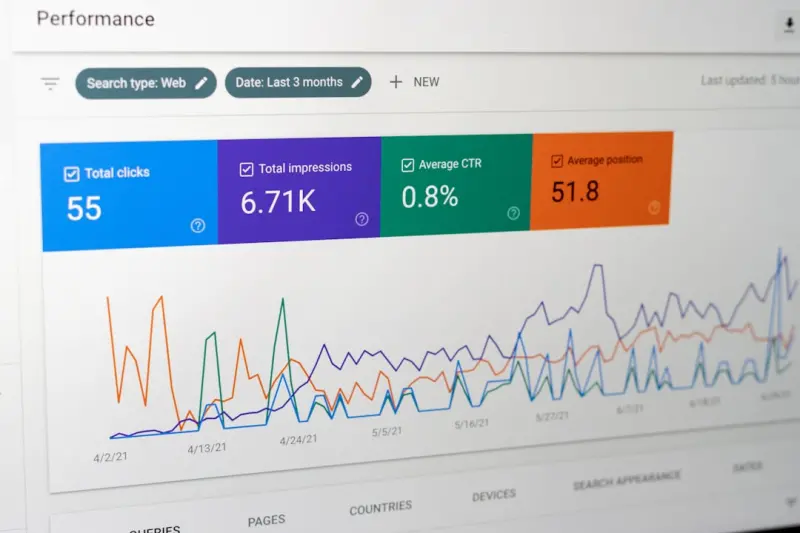
Beyond Snippets: Mastering SERP Features for SaaS Growth
The SERP is now a dynamic canvas of rich results, FAQs, and knowledge panels. Learn how SaaS companies can use structured data and AI‑driven features to domin...Read More
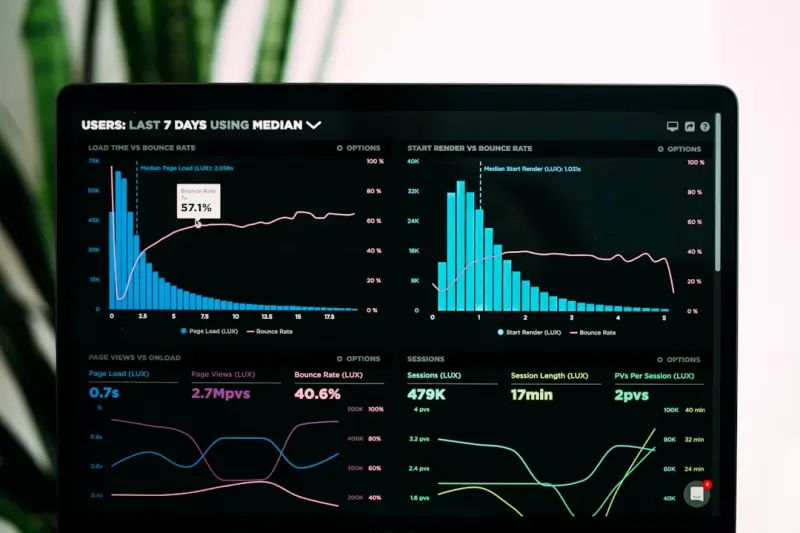
Network Observability as a Service: From Data to Action
Observability‑as‑a‑Service unifies metrics, traces, and logs into a single, actionable view, enabling SaaS teams to anticipate issues, optimize performanc...Read More

Pet‑Friendly Home Offices: Boosting Productivity and Happiness
A practical guide to designing a home office that welcomes your pets, featuring smart gadgets, ergonomic tips, and digital‑balance strategies to enhance produ...Read More

The Intersection of Holistic Living and Digital Strategy
Discover the powerful connection between maintaining physical health through quality nutrition and sustaining a high-performing website through expert digital s...Read More
0 Comments
Post Comment
You will need to Login or Register to comment on this post!